
.png)
TL;DR:
- Supply chain leaders face increasing regulatory, social, and environmental risks impacting costs and reputation. Effective risk management requires comprehensive multi-tier mapping, ESG scoring, and balancing resilience with efficiency. Building genuine supply chain resilience through capability development outperforms reactive, compliance-based approaches over time.
Regulatory pressure is no longer a background concern for supply chain leaders. Between the EU’s Corporate Sustainability Reporting Directive (CSRD), growing due diligence legislation across Europe, and the increasing scrutiny from customers and investors, missing a sustainability risk in your supply chain is no longer just an operational problem. It is a financial and reputational one. Social risks including forced labor, child labor, and human rights violations can result in fines, shutdowns, and lasting brand damage. This article breaks down nine concrete examples across environmental, social, and governance dimensions, with real-world context and decision frameworks you can actually use.
Table of Contents
- How to identify supply chain sustainability risks
- Environmental risks: The impact of resource and climate issues
- Social and governance risks: Human rights, compliance, and reputation
- Decision frameworks and the efficiency vs. resilience debate
- Comparison of key supply chain sustainability risks
- Why most companies underestimate supply chain sustainability risks
- Move from risk identification to supply chain resilience
- Frequently asked questions
Key Takeaways
| Point | Details |
|---|---|
| Comprehensive risk identification | Mapping beyond Tier 1 suppliers and using modern ESG frameworks dramatically improves risk detection. |
| Environmental risks in focus | Climate issues, fossil fuel dependence, and poor waste management are leading threats in Romanian supply chains. |
| Social risks have critical impacts | Forced labor and compliance failures quickly trigger fines, shipment delays, and reputation loss. |
| Resilience beats short-term efficiency | Building redundancy and collaborative supplier capacity reduces disruptions more than cost-cutting alone. |
| Tailored solutions drive results | Structured certifications and real ESG metrics enable measurable progress and risk reduction. |
How to identify supply chain sustainability risks
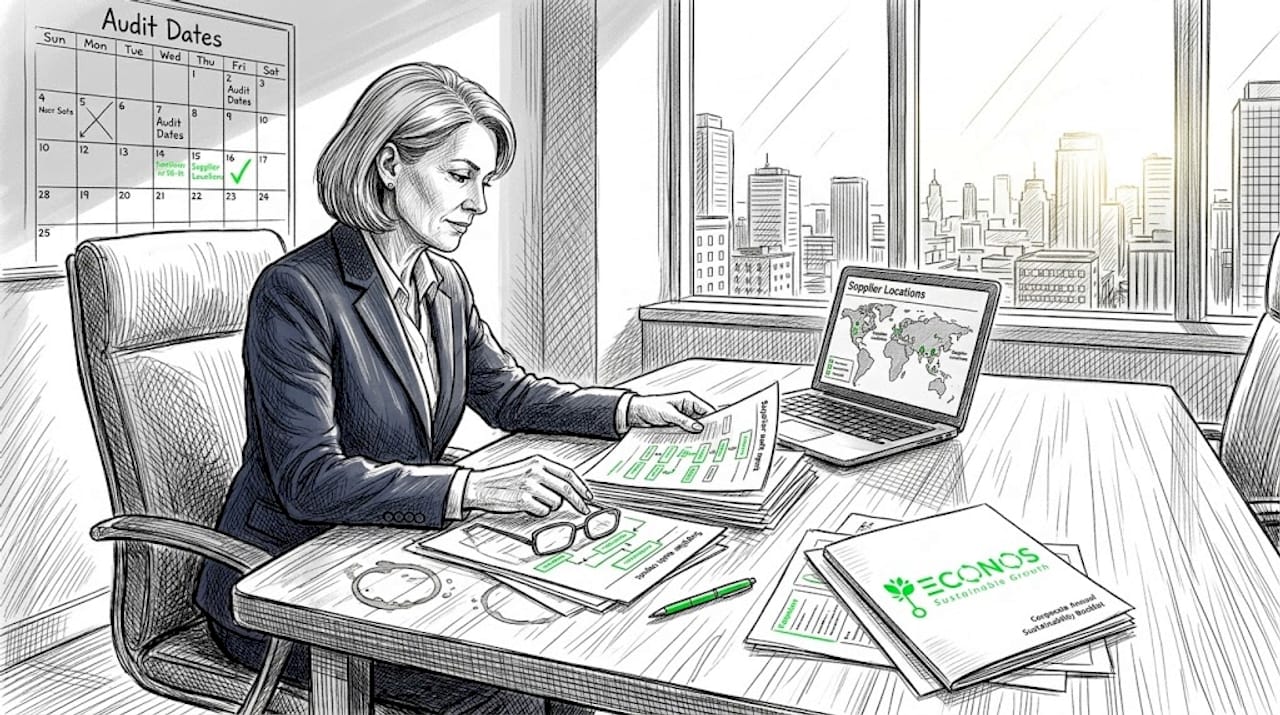
Before you can address risks, you need a reliable way to find them. Many companies operate with incomplete supplier maps, limiting their visibility to direct (Tier 1) suppliers while remaining blind to vulnerabilities two or three tiers upstream. That is exactly where the most severe ESG risks tend to hide.
A structured identification process involves three core steps:
-
Map your full supplier network. Start with Tier 1 suppliers, then work outward to raw material sources. Tools like supplier questionnaires, third-party databases, and satellite monitoring are increasingly accessible. An ESG workflow for manufacturers typically begins here, because you cannot manage what you cannot see.
-
Score suppliers using ESG scorecards. Assign scores across environmental performance, labor standards, and governance quality. Weight each category according to your industry exposure. A company in textiles will weight labor standards differently than a steel distributor focused on carbon emissions. Scorecards that pull in ESG metrics examples from real reporting frameworks are more defensible and actionable than generic checklists.
-
Prioritize using a hybrid risk framework. Blending the ISM (Institute for Supply Management) risk categories with RPN (Risk Priority Number) scoring and RMN (Risk Management Network) approaches gives you a balanced view of likelihood, severity, and detectability. Proactive resilience through multi-tier mapping and ESG procurement integration benchmarks show organizations achieve 40% fewer supply disruptions compared to reactive counterparts.
Statistic to remember: Companies with proactive supply chain resilience programs experience 40% fewer disruptions than those relying on reactive responses alone.
Pro Tip: Do not stop your risk scan at Tier 1 suppliers. The highest-impact risks, from forced labor to raw material scarcity, frequently sit at Tier 2 or Tier 3. Invest one sprint per quarter in extending your visibility downstream.
With a method for identifying risks established, let’s examine the specific types and examples you will face.
Environmental risks: The impact of resource and climate issues
Environmental risks are among the most tangible sustainability threats in modern supply chains. They range from acute climate events that disrupt logistics to slow-burning resource constraints that erode supplier viability over years. In Romania, the picture is particularly stark.
Romania’s supply chains face high climate vulnerability, including floods and droughts, combined with a fossil fuel dependence rate of approximately 70%, poor waste management infrastructure, and heavy import dependency that amplifies external shocks. This combination makes Romanian companies more exposed than many Western European peers to environmental supply chain failures.
Here are the major environmental risk categories with real business impacts:
| Risk type | Real-world example | Business impact |
|---|---|---|
| Extreme weather events | Danube flooding disrupting freight corridors | Production halts, missed delivery windows |
| Fossil fuel price spikes | Energy cost surges affecting upstream suppliers | Input cost inflation, margin erosion |
| Water scarcity | Drought limiting agricultural and industrial output | Raw material shortages |
| Waste and pollution liabilities | Suppliers fined for non-compliance | Reputational exposure, operational shutdowns |
| Import dependency shocks | Single-source raw material disruptions | Supply gaps amplified by border restrictions |
Beyond the numbers, the lived business reality matters. A manufacturer relying on a single Eastern European supplier for a specialty chemical faces a compounding risk: if that supplier’s facility is located in a flood-prone area and depends on fossil-heavy energy, any climate event can simultaneously disrupt production, inflate transport costs, and trigger regulatory penalties. Understanding this through tools like life cycle assessment gives you visibility into where environmental risk actually concentrates across the product life cycle.
One area many managers overlook is Scope 3 emissions from purchased goods and services. These upstream emissions not only represent the largest share of most companies’ carbon footprints but also signal which suppliers are most exposed to future carbon pricing and climate regulation. If your supplier cannot manage its own emissions, it is already a financial risk to your business.
“Climate disruptions do not merely slow supply chains. They restructure competitive landscapes, rewarding those who anticipated and built redundancy into their networks.”
Environmental issues are only one dimension. Let’s turn to the critical social risks that affect supply chains globally.
Social and governance risks: Human rights, compliance, and reputation
Social and governance risks are where the legal exposure can be most immediate. Forced labor, child labor, and unsafe workplace conditions are not hypothetical problems confined to distant developing markets. They appear in agriculture, construction, electronics assembly, and garment manufacturing globally, including within EU supply chains.
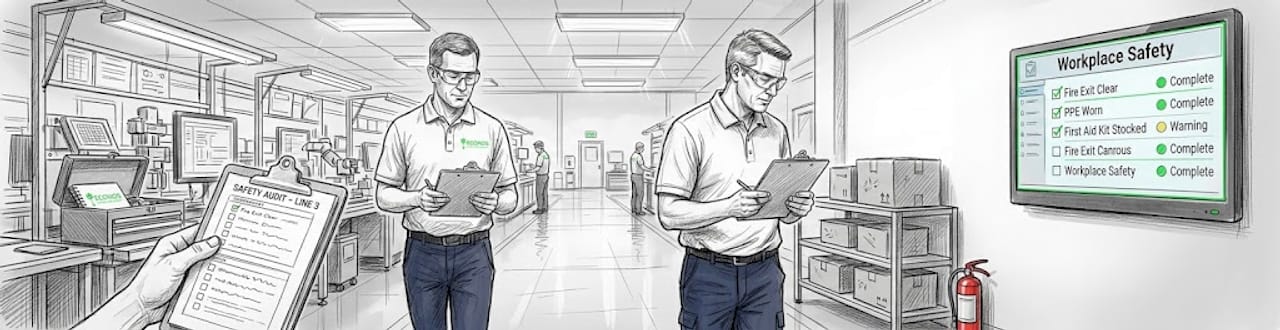
The consequences are concrete. Forced labor, child labor, and poor labor practices in supply chains regularly lead to fines, import bans, factory shutdowns, and front-page reputational crises. The U.S. Uyghur Forced Labor Prevention Act (UFLPA) has already resulted in billions of dollars of goods being blocked at the U.S. border. Germany’s Supply Chain Due Diligence Act (LkSG) now creates direct legal liability for German companies and their European subsidiaries.
Key social and governance risks include:
- Forced and child labor in upstream raw material extraction or subcontracted manufacturing
- Dangerous working conditions that violate ILO (International Labour Organization) standards
- Bribery and corruption among procurement intermediaries
- Anti-competitive behavior and false supplier declarations
- Lack of worker voice and suppression of trade union rights
| Approach | Short-term cost | Long-term outcome |
|---|---|---|
| Compliance-only audits | Low, checkbox process | Misses systemic risks, audit fatigue |
| Collaborative capability-building | Higher upfront investment | Resilient suppliers, lower disruption rates |
| No action | Appears costless | Regulatory fines, reputational collapse |
Statistic: European companies subject to supply chain due diligence laws face penalties of up to 2% of global annual turnover for non-compliance.
What makes social risks particularly dangerous is their velocity. A labor violation story can move from a supplier’s factory floor to international headlines within 72 hours. Investors, procurement directors at your customers, and your own workforce will react. Understanding sustainable supply chain practices built on genuine accountability rather than performative audits is how leading companies are separating themselves, and it is also how they avoid greenwashing accusations that can be just as damaging as the original violations.
You now know the main environmental and social risks. The next step is making sense of trade-offs and choosing a risk management strategy for your supply chain.
Decision frameworks and the efficiency vs. resilience debate
This is where supply chain strategy gets genuinely difficult. Almost every risk mitigation action has a cost. Diversifying suppliers reduces single-source dependency but increases procurement complexity and often raises unit costs. Holding larger safety stocks improves resilience but ties up working capital. The pressure to stay cost-competitive pushes many companies toward consolidation, which is efficient until it isn’t.
Research on contrasting supply chain viewpoints illustrates this tension clearly: efficiency-focused organizations consolidate suppliers and optimize for cost, while resilience-focused organizations maintain redundancy and invest in relationship depth. The uncomfortable reality is that many companies claim to value resilience but make procurement decisions that optimize entirely for efficiency. They effectively kick problems down the road until a disruption forces a costly, reactive response.
Here is a stepwise framework for making smarter decisions:
-
Classify your risks by severity and likelihood. Use a 2x2 matrix: high severity/high likelihood risks demand immediate action; low severity/low likelihood risks can be monitored. Most supply chain sustainability risks cluster in the high severity/low likelihood quadrant, which is exactly where companies underinvest.
-
Assess your current supplier relationships. Are they transactional or collaborative? Transactional relationships are more brittle. Collaborative ones, where you invest in supplier capability, are where ESG compliance translates into measurable efficiency gains over the medium term.
-
Decide your resilience investment level. This is not a binary choice. You can apply deep resilience strategies to your ten most critical suppliers while accepting efficiency-first approaches for commodity suppliers with easy substitutes.
-
Build sustainability criteria into tender documents and contracts. CSRD compliance is pushing this direction anyway. Companies that integrate sustainability criteria now will be better positioned when reporting requirements tighten.
Pro Tip: When mapping risks, look beyond immediate cost savings. A supplier that appears cheap today but has zero climate adaptation planning, no worker safety record, and no ESG reporting is already a liability on your balance sheet. It just hasn’t materialized yet.
Key benchmark: Organizations that invest in proactive resilience report 40% fewer supply disruptions, which means lower emergency procurement costs, fewer missed customer commitments, and more stable operations.
Comparison of key supply chain sustainability risks
To help you prioritize, here is a direct side-by-side comparison of the three main sustainability risk categories:
| Risk category | Primary examples | Severity in Romania | Recommended first action |
|---|---|---|---|
| Environmental | Floods, droughts, fossil fuel dependency, waste violations | High | Climate vulnerability mapping, LCA for hotspots |
| Social | Forced labor, unsafe conditions, child labor | Medium-High | Supplier code of conduct, Tier 2 audits |
| Governance | Corruption, bribery, false declarations | Medium | Procurement policy review, ESG scoring |
Romania’s climate vulnerability combined with fossil fuel dependence at 70% and significant import dependency places environmental risks at the top of the priority list for most Romanian supply chain managers. That said, social risks from labor violations escalate quickly into regulatory territory under incoming EU due diligence rules, making them a close second.
Recommended priorities for most mid-size and large companies:
- Immediately: Complete Tier 1 supplier ESG mapping and flag climate-exposed nodes
- Within six months: Extend mapping to Tier 2 suppliers in highest-risk categories
- Within twelve months: Integrate ESG criteria into procurement scoring and contracts
- Ongoing: Build supplier capability rather than relying solely on audits
- Annually: Report progress under CSRD/ESRS and refine your risk register based on new data
Use LCA for supply chain risks to quantify environmental hotspots and make your prioritization defensible to auditors, investors, and regulators.
Why most companies underestimate supply chain sustainability risks
Here is the honest truth: most supply chain sustainability programs are, at their core, a Tier 1 risk exercise dressed up as due diligence. Companies send out questionnaires to their top 20 suppliers, receive reassuring responses, file the results, and call it done. It feels rigorous. It rarely is.
The deeper problem is that this approach is structurally designed to avoid finding real problems. Tier 1 suppliers know what answers to give. They have read the same questionnaires for years. The forced labor is not happening in their factory. It is happening two tiers back, in the raw material extraction that feeds their production. The waste violation is not on their site. It is at the subcontractor they quietly use during peak seasons.
We see this pattern repeatedly with companies that come to us after an incident. They had an audit program. They had a supplier code of conduct. They had a sustainability section in their annual report. And then something broke anyway, because the program was designed around compliance theater rather than genuine risk intelligence.
The companies that get this right share one characteristic: they treat sustainability risk as a business intelligence function, not a reporting function. They invest in key ESG metrics that actually tell them something about supplier behavior and exposure, not just what their suppliers claim. They run scenario analyses. They ask what would happen to their business if their top supplier faced a climate disruption, a labor investigation, or a carbon border adjustment cost that made their pricing non-competitive.
The efficiency versus resilience debate is not really a debate. It is a time horizon question. Efficiency wins in the short run. Resilience wins when reality intervenes. Companies that build genuine resilience, through capability building rather than box-checking, consistently outperform over three to five year cycles. That is not idealism. That is risk-adjusted business strategy.
Move from risk identification to supply chain resilience
Knowing the risks is step one. Structuring your response is where the real work begins, and where many teams get stuck without the right tools and frameworks.
At ECONOS, we help mid-size and large companies move from scattered awareness to structured ESG risk management that holds up under scrutiny. Whether you are preparing for EcoVadis certification to demonstrate supplier sustainability credentials, or building an end-to-end ESG reporting program under CSRD, we work alongside your team to build the internal capability that lasts. Our approach is practical: we do not create consultant dependency. We transfer knowledge, build your team’s skills, and leave you better equipped than when we started. If you are ready to turn risk identification into a strategic advantage, let’s talk.
Frequently asked questions
What are the most common supply chain sustainability risks in Romania?
Romania’s supply chains face high climate vulnerability, significant fossil fuel dependence (around 70%), inadequate waste management, and heavy reliance on imports that amplify external shocks, making environmental risks the top priority for most Romanian supply chain managers.
How does forced labor risk affect supply chains?
Forced labor and related labor violations can trigger import bans, regulatory fines, factory shutdowns, and swift reputational damage that follows companies for years, particularly under new EU due diligence legislation.
What steps can supply chain managers take to reduce these risks?
The most effective approach combines multi-tier supplier mapping with proactive resilience strategies, integrating ESG criteria into procurement scorecards and diversifying critical supply nodes, which benchmarks show can reduce disruptions by 40%.
Which is more important: risk efficiency or resilience?
Balancing efficiency and resilience is ultimately a time horizon question: efficiency wins short-term, but resilience consistently delivers lower disruption costs and greater competitive stability over multi-year cycles, making it the stronger strategic investment.