
.png)
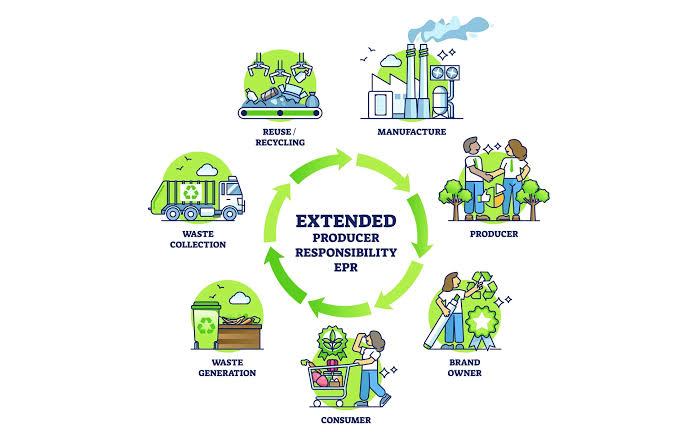
PPWR producer registration: the obligation that decides whether you can legally sell
Regulation (EU) 2025/40 has applied directly across all 27 member states since 12 August 2026. Most of the market conversation has been about recyclability, labelling, PFAS and the declaration of conformity.
The obligation that actually determines whether a packaged product can be sold lawfully in a given country is far less interesting to write about. It is register entry.
The logic is straightforward. Article 44 requires each member state to run a register of producers and makes entry in that register a precondition for placing packaging on that market. Article 45 puts the mirror duty on the operator: register in every member state where the packaging is first made available, declare the quantities, pay the contribution.
No registration, no lawful sale. That is not a marketing line, it is the mechanism in the text.
Who counts as the producer
This is where most time gets lost, because the regulation uses two words that everyday language treats as synonyms.
The manufacturer is responsible for the technical conformity of the packaging, for the technical file and for the declaration of conformity. The producer, in the extended producer responsibility sense, is the operator that first makes the packaging available on the market of a member state and that carries the cost of managing it once it becomes waste.
The practical consequence is that a single packaging item has one manufacturer at Union level, but can have several producers, one in each member state where it is first made available.
For a company selling across borders, the useful question is not who made the box. It is who first places it on the market of each destination country. Sell into Hungary directly to end customers and you are the producer there. Sell into Bulgaria through a local importer who takes title and puts the goods on the market, and the producer role sits with the importer.
This is not a theoretical exercise. It decides how many registrations you need, and the answer changes from one sales channel to another inside the same company.
What registration actually involves
Registration is more than a declaration that you exist. The producer provides company identification data, information on the types of packaging it places on the market, and how it discharges its extended producer responsibility obligations, individually or through an authorised organisation.
After registration the duties become recurring. Quantities placed on the market are declared periodically, broken down by material, and the corresponding fee is paid. The reported data is not statistics. It is the basis for the financial calculation and, during an inspection, for establishing non conformity.
One secondary source referencing Annex IX mentions a maximum of twelve weeks for a registration number to be issued once the file is complete. The figure should be confirmed in the text before it is used for planning, but the order of magnitude is useful: registration is not something you resolve on the day you remember it.
What is not working yet, and why it matters
Here is the part that gets written about least.
The PPWR required the Commission to adopt, within twelve months of entry into force and therefore by February 2026, an implementing act setting the harmonised format for registration and reporting to the national registers. That act was not adopted on time. A draft has been circulated, but at the time of writing the single format is not in force, and member states then have eighteen months from adoption to bring their registers into line.
The result is a contradiction that companies feel directly. The obligation to be registered already applies, while the harmonised infrastructure meant to make it bearable does not yet exist. Registration remains a national exercise, with different portals, formats and languages.
A study commissioned by Amazon in March 2026, which walked through the real registration process in ten member states, identified 64 distinct registration fields, of which roughly a quarter matched the fields in the draft European act. The rest were national additions. The figures deserve checking at source, but the conclusion matches what we see with clients: there is no single file you can submit in eight countries.
The Romanian market, specifically
Romania is a useful illustration of the gap between the regulation and national readiness.
The country does not start from zero. Law 249/2015, Government Emergency Ordinance 196/2005 on the Environment Fund, the Environment Fund Administration, the National Environmental Guard and the existing producer responsibility organisations are all in place.
What was not publicly mapped out when the regulation became applicable was the complete architecture connecting those pieces to the PPWR requirements: the register in the form Article 44 requires, a clear split of competences between authorities, and the future penalty regime.
For a brand entering Romania, the operational conclusion is not to wait. Existing reporting and payment obligations to the Environment Fund remain in force and still have to be met. The regulation layers on top of them. The real risk is not registering too early, it is discovering during an inspection that you cannot document who the producer is for each packaging flow you generate.
What to do now, in the right order
Start with the role map. Take each sales channel, each destination country and each packaging type, primary, secondary and transport, and establish who first makes it available on that market. The output is the list of countries where you need to be registered.
Second, build the quantitative inventory. You cannot report what you do not measure. You need weights by material and by packaging type, linked to product codes, not global annual estimates.
Third, audit what already exists. Many companies are registered in their home market and treat export flows as if the obligation stopped at the border. That is where most of the surprises are.
Fourth, plan the registrations outside your home country with realistic lead times and, where you have no establishment, with an authorised representative.
Frequently asked questions
Is there a small company exemption?The core registration and reporting duties do not come with a general exemption based on company size. The regulation contains specific derogations, but they do not work as a turnover threshold below which the obligations disappear.
We sell into the EU only through a local importer. Do we still register?If the importer takes title and is the first to make the packaging available on that national market, the producer role sits with the importer. Confirm this contractually, per flow, and keep the evidence.
Does one registration cover the EU?No. Registration is national. Selling into eight countries means eight registrations, eight reporting cycles and eight fee schedules.
Does the fee depend only on weight?Today, essentially yes. From 2030 eco modulation based on the recyclability performance of the packaging enters the calculation.
How we work on this
ECONOS maps the producer role per flow, builds the country by country obligation map, and handles EPR registration in Romania on the client's behalf. For registrations in other member states we work through partners, so the client keeps a single point of contact.
We do not draft declarations of conformity. We review them, as a documentary audit of the declarations received from suppliers.
If you do not yet know in how many countries you are the producer and in how many you are not, start with the role map. Everything else plans easily from there.