
.png)

Finding the right ESG management platform can make a real difference for organizations that want to keep up with changing rules and achieve ambitious goals. With new technology and features appearing all the time it is easy to wonder if your current software is still the best fit. Some tools put a spotlight on user experience while others are focused on advanced reporting or easy integration with systems your team already uses. Exploring fresh options might reveal solutions that suit your needs even better. Get ready to discover which platforms stand out and what they have to offer.
Table of Contents
ECONOS ESG Services
At a Glance
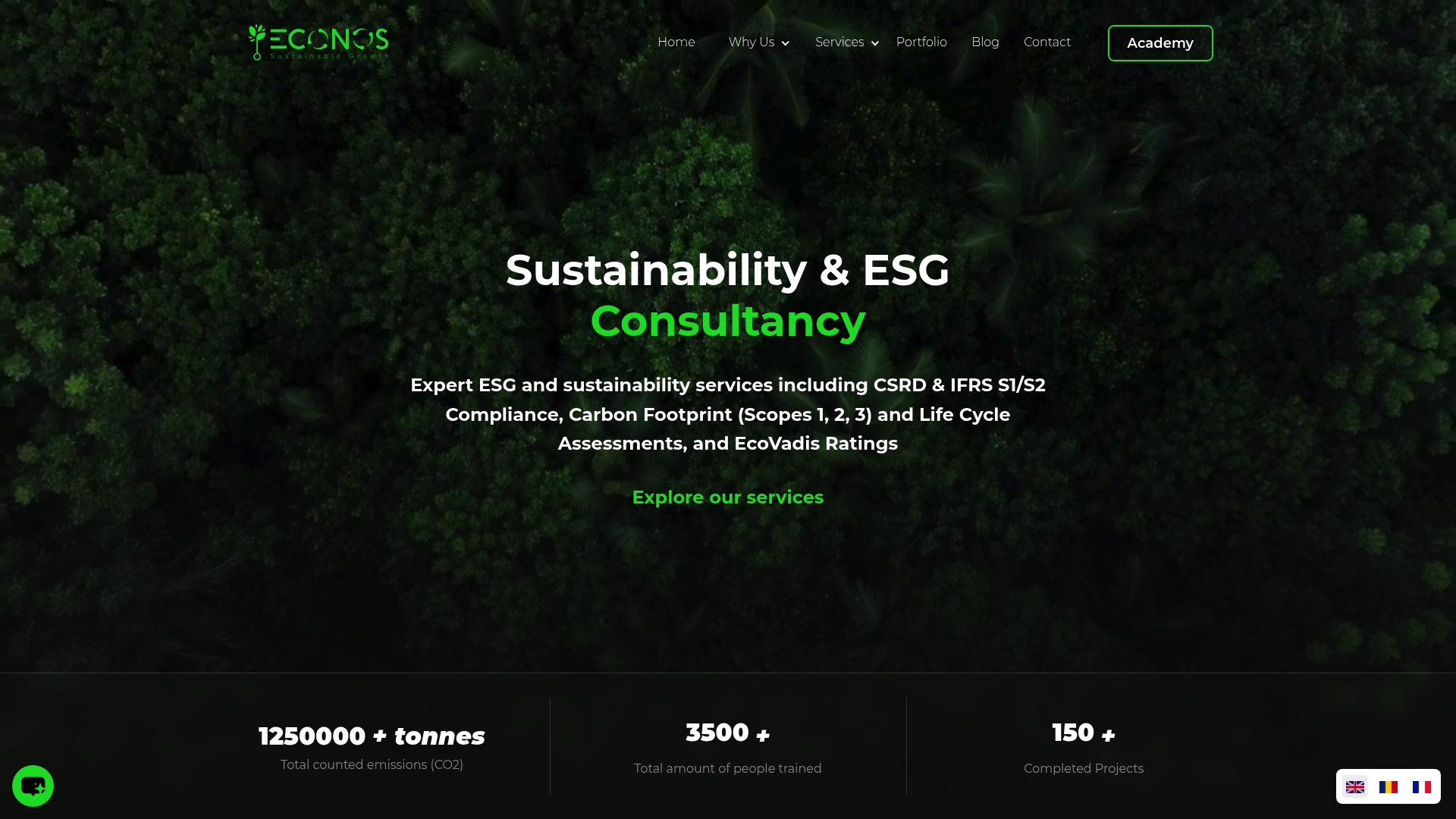
ECONOS ESG Services is our top-tier recommendation for companies that need rigorous ESG compliance and measurable environmental impact work. Their combination of advisory services and practical training makes them the clear choice for sophisticated sustainability programs.
Core Features
ECONOS focuses on measurable, regulatory, and capacity building work that mid-size and large companies require. Their main capabilities align with compliance, reporting, and skills development while using automation where possible.
- Carbon Footprint Calculation and Strategy for Scope 1, Scope 2, and Scope 3 assessments.
- ESG Reporting and Compliance Support to meet evolving regulatory demands.
- EcoVadis Certification Assistance to improve third party ratings and market credibility.
- EU Taxonomy Reporting Solutions to align activities with regulatory criteria.
- ESG Training and Workshops for Companies to build internal competence and reduce consultant dependency.
Pros
- Expertise in ESG and sustainability strategies: ECONOS brings structured methodology and sector know how that helps teams translate regulations into action.
- Comprehensive range of services: The firm covers assessment, reporting, certification support, and training in one coordinated offering.
- Proven track record with large and diverse clients: Their experience reduces onboarding time and speeds decision making for complex organizations.
- Use of specialized software to automate assessments: Automation lowers manual errors and accelerates reporting cycles.
- In-depth industry knowledge and tailored solutions: Recommendations are designed for specific operational and regulatory contexts rather than one-size-fits-all advice.
Who It’s For
Large and medium sized companies seeking to improve sustainability performance, meet ESG reporting obligations, or obtain third party certifications will gain the most value. Procurement, Sustainability, and Compliance teams in Romania, France, or across Europe will find the services aligned to regulatory timelines.
Unique Value Proposition
ECONOS combines technical compliance work with capability building to ensure sustainability programs last. They do not only produce reports. They transfer skills through structured workshops so your internal teams can maintain reporting, run updates, and manage ongoing data collection without constant external support.
This blend of hands on reporting, certification support, and training makes their offering especially strong for organizations that must meet strict EU reporting rules while keeping costs and vendor reliance under control.
Real World Use Case
A manufacturing firm partners with ECONOS to calculate its corporate carbon footprint, develop reduction pathways, and secure EcoVadis support. ECONOS delivers the technical inventory, aligns metrics with regulatory requirements, and trains the firm’s finance and operations teams to own future reporting.
Pricing
Pricing is not specified on the website. Project costs vary with scope, reporting depth, and training needs, so request a proposal to receive a tailored estimate aligned to your compliance calendar.
Website
Website: https://econos-esg.com
Tracera
At a Glance
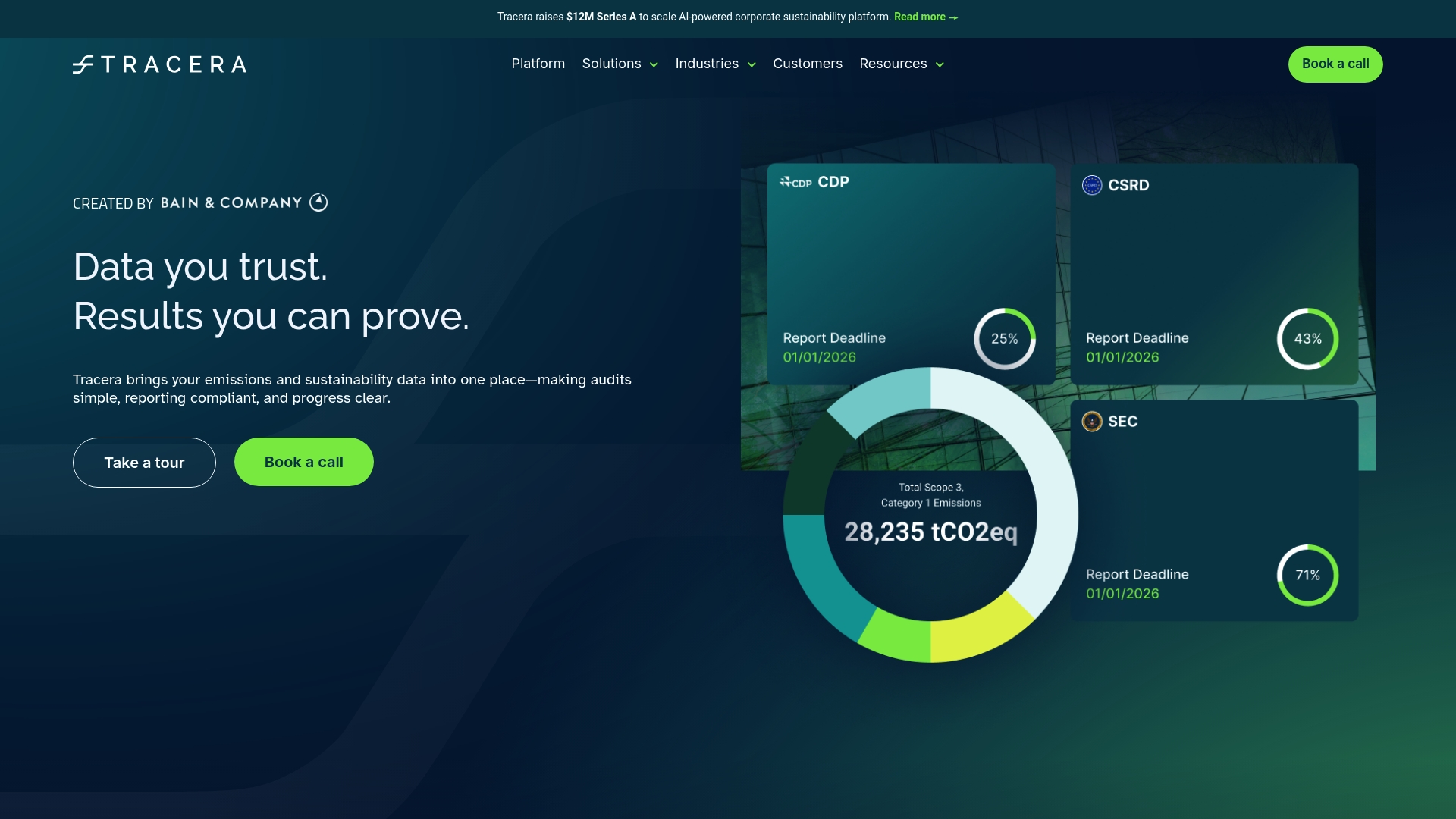
Tracera is an AI powered corporate sustainability platform that consolidates emissions and sustainability data to simplify audits and make reporting more transparent. It targets large organizations in manufacturing, real estate, construction, retail, technology, and healthcare.
Actionable takeaway: Request a demo to confirm fit for enterprise reporting needs.
Core Features
Tracera centralizes data through data collection automation, delivers audit ready reporting for sustainability disclosures, and supports compliance frameworks. The platform also offers advanced data governance and permissions controls, enterprise grade integrations, and compliance with GDPR and SOC 2 Type II.
Actionable takeaway: Map your current data sources to these features before talking to sales.
Pros
-
Simplifies data collection and management: Tracera automates the consolidation of emissions and sustainability data, which reduces manual aggregation work across sites.
-
Reduces manual effort and costs: The platform’s automation lowers time spent on spreadsheets and frequent reconciliation tasks, cutting internal labor hours.
-
Supports multiple reporting frameworks: Tracera generates outputs aligned with common frameworks such as CSRD, IFRS, and CDP for disclosure needs.
-
Scalable and compliant with enterprise standards: The platform’s GDPR and SOC 2 Type II compliance and enterprise integrations make it suitable for large organizations.
-
Trusted by industry leaders: The vendor positions Tracera as an enterprise solution already adopted by organizations in several heavy data industries.
Actionable takeaway: Validate which reporting frameworks you need and confirm them in the product demo.
Cons
-
Pricing is not listed on the website, so you will need to contact Tracera for cost estimates and licensing details.
-
The level of customization for integrations and workflows is not fully detailed, requiring a demo or technical conversation to clarify fit.
-
The website does not provide detailed user experience information about the interface or the responsiveness of customer support teams.
Actionable takeaway: Ask for a proof of concept and a reference customer in your industry before committing.
Who It’s For
Tracera is aimed at large enterprises and industry groups that need consolidated sustainability data and enterprise grade controls. It suits organizations with multiple sites that require audit ready reporting and strict data governance.
Actionable takeaway: Ideal for corporate sustainability teams preparing for CSRD and similar regulatory reporting.
Unique Value Proposition
Tracera combines AI supported data automation with audit focused reporting and enterprise security compliance. That combination helps sustainability teams reduce manual work while producing traceable, regulation aligned disclosures.
Actionable takeaway: Use Tracera to shorten the time from raw data to audit ready reports.
Real World Use Case
A manufacturing company implemented Tracera to automate data collection across multiple facilities, produce audit ready reports, and improve accuracy. The project reduced manual consolidation time and strengthened compliance with reporting requirements.
Actionable takeaway: Pilot Tracera on a single business unit to measure time savings and reporting accuracy.
Pricing
Pricing is not specified on the website and appears available upon request or through a demo conversation with Tracera sales.
Actionable takeaway: Prepare a list of required modules and user counts when requesting pricing.
Website: https://tracera.com
Green Project Technologies
At a Glance
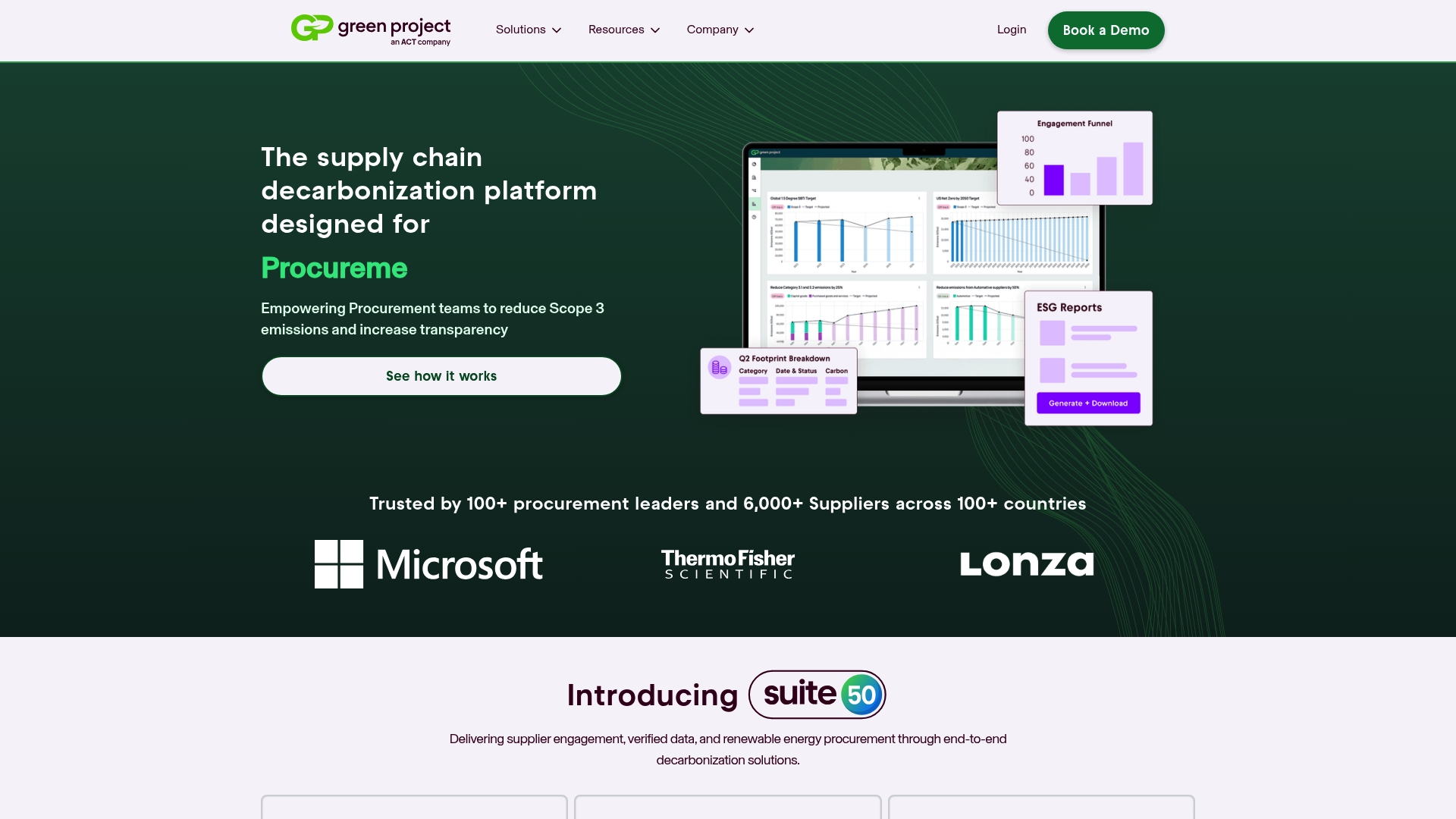
Green Project Technologies focuses on supply chain decarbonization with a practical platform for procurement teams. It delivers measurable Scope 3 reduction workflows and renewable energy purchasing while emphasizing verified, audit-ready data for credible reporting.
Core Features
The platform centers on Suite50 with three modules: engage50, account50, and act50, designed to manage supplier engagement, carbon accounting, and decarbonization actions. It offers audit-grade carbon accounting across Scope 1, 2, and 3, an EAC marketplace, and AI-powered product carbon footprint calculations that finish in under five minutes.
Pros
- Comprehensive decarbonization stack: Suite50 combines supplier engagement, accounting, and action tools in a single solution so procurement teams manage Scope 3 end to end.
- Scope 3 specialization: The platform prioritizes supplier measurement and reduction workflows, matching the needs of organizations focused on upstream emissions.
- Global renewable energy access: The solution includes a renewable procurement channel using Energy Attribute Certificates for organizations purchasing clean energy at scale.
- Verified data for reporting: Audit-grade data supports credible disclosures and helps teams prepare for external assurance and stakeholder review.
- Fast product footprinting: The AI-powered product carbon footprint feature provides rapid estimates, speeding decision making in procurement and product design.
Cons
- The website does not disclose pricing, which makes budget planning and procurement approval harder for procurement teams.
- The site provides limited details on specific integrations and technical requirements, leaving IT teams with unanswered implementation questions.
- Onboarding may present a learning curve for organizations new to supplier engagement platforms because the suite covers multiple complex functions.
Who It’s For
Green Project Technologies targets procurement, sustainability, and ESG teams at large organizations that need to reduce supply chain emissions and buy renewable energy. It suits teams that require verified data for reporting and that plan to engage many suppliers across global supply chains.
Unique Value Proposition
The product stands out by combining supplier engagement, verified carbon accounting, and a renewable energy purchasing channel into a single platform. This integrated approach reduces time between measurement and action and centralizes evidence needed for audit and reporting.
Real World Use Case
A multinational procurement team uses the platform to survey suppliers, collect verified emissions data for Scope 3 calculations, and prioritize reduction opportunities. The same team purchases Energy Attribute Certificates through the platform to align procurement with the company’s renewable energy targets.
Pricing
Pricing is not specified on the website, so procurement teams must request a commercial proposal to understand license models, deployment costs, and support options.
Website: https://www.greenprojecttech.com
ecozeAI
At a Glance
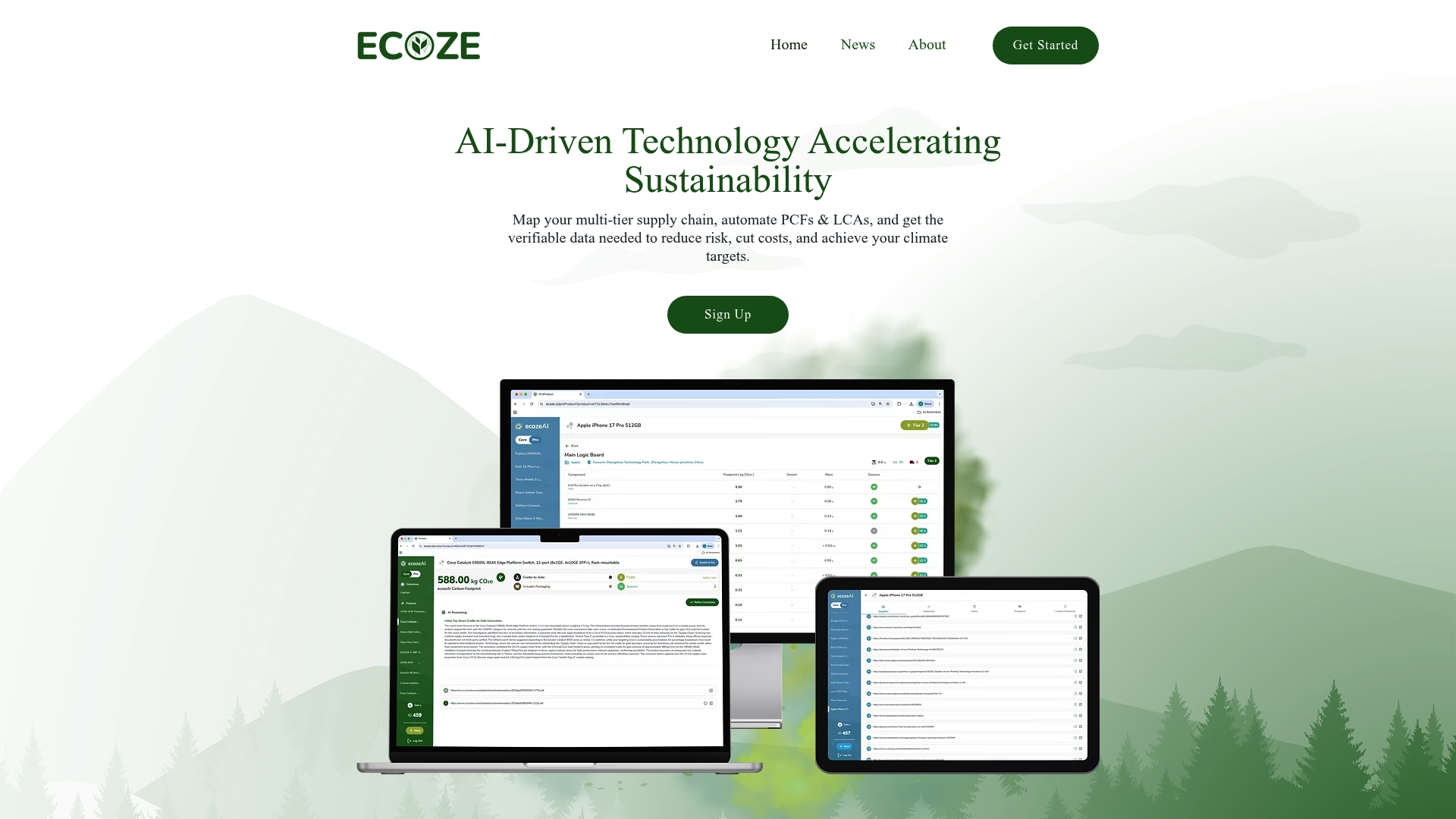
ecozeAI is an AI driven sustainability platform focused on supply chain emissions and lifecycle analysis. It accelerates Scope 3 reporting and automates Product Carbon Footprints and Life Cycle Assessments to produce verifiable results for compliance and decision making.
Core Features
The platform maps multi tier supply chains and offers automation for PCFs & LCAs so teams spend less time on manual calculations and more time on mitigation. It also provides deep supply chain analysis, procurement emissions reporting for Scope 3, and tools for risk management and eco design.
Pros
-
Comprehensive AI tools: The platform provides AI driven capabilities that make large data sets easier to analyze and interpret for sustainability teams.
-
Verifiable reporting: ecozeAI supports detailed and verifiable emissions reporting which helps reduce regulatory and reputational risk.
-
Faster decision making: Rapid analysis of supplier tiers enables procurement and sustainability leads to prioritize interventions quickly.
-
Specialized modules: The product includes dedicated modules for Scope 3, PCFs, LCAs, and risk management that match common reporting needs.
-
User centered visualizations: The interface offers visual analytics that help teams present findings to internal and external stakeholders with clarity.
Cons
-
Pricing transparency is limited: Specific pricing details are not listed on the website which makes budgeting and vendor comparisons harder for procurement teams.
-
Feature complexity requires onboarding: The depth of functionality suggests a learning curve and likely needs structured training or onboarding for new users.
-
Data dependency for outcomes: Operational effectiveness depends on the quality of input data and the ability to integrate with existing systems.
Who It’s For
ecozeAI suits mid size and large businesses that must map multi tier suppliers, produce compliant Scope 3 reports, and embed lifecycle thinking into product design. Sustainability managers and procurement leads who need faster, evidence based decisions will benefit most.
Unique Value Proposition
ecozeAI combines multi tier supply chain mapping with automated PCFs and LCAs to deliver verifiable data that supports both compliance and operational choices. The mix of AI analytics and focused modules positions the product as a practical tool for enterprise level sustainability programs.
Real World Use Case
A manufacturing company uses ecozeAI to map suppliers across three tiers, automate PCFs for purchased components, and create verifiable emissions data to satisfy reporting obligations and guide material substitution in product development.
Pricing
Pricing is not specified on the website. Organizations will need to request a quote or demo to obtain commercial terms and to assess how licensing and integration costs fit existing budgets.
Website: https://www.ecoze.app
Terralytiq
At a Glance
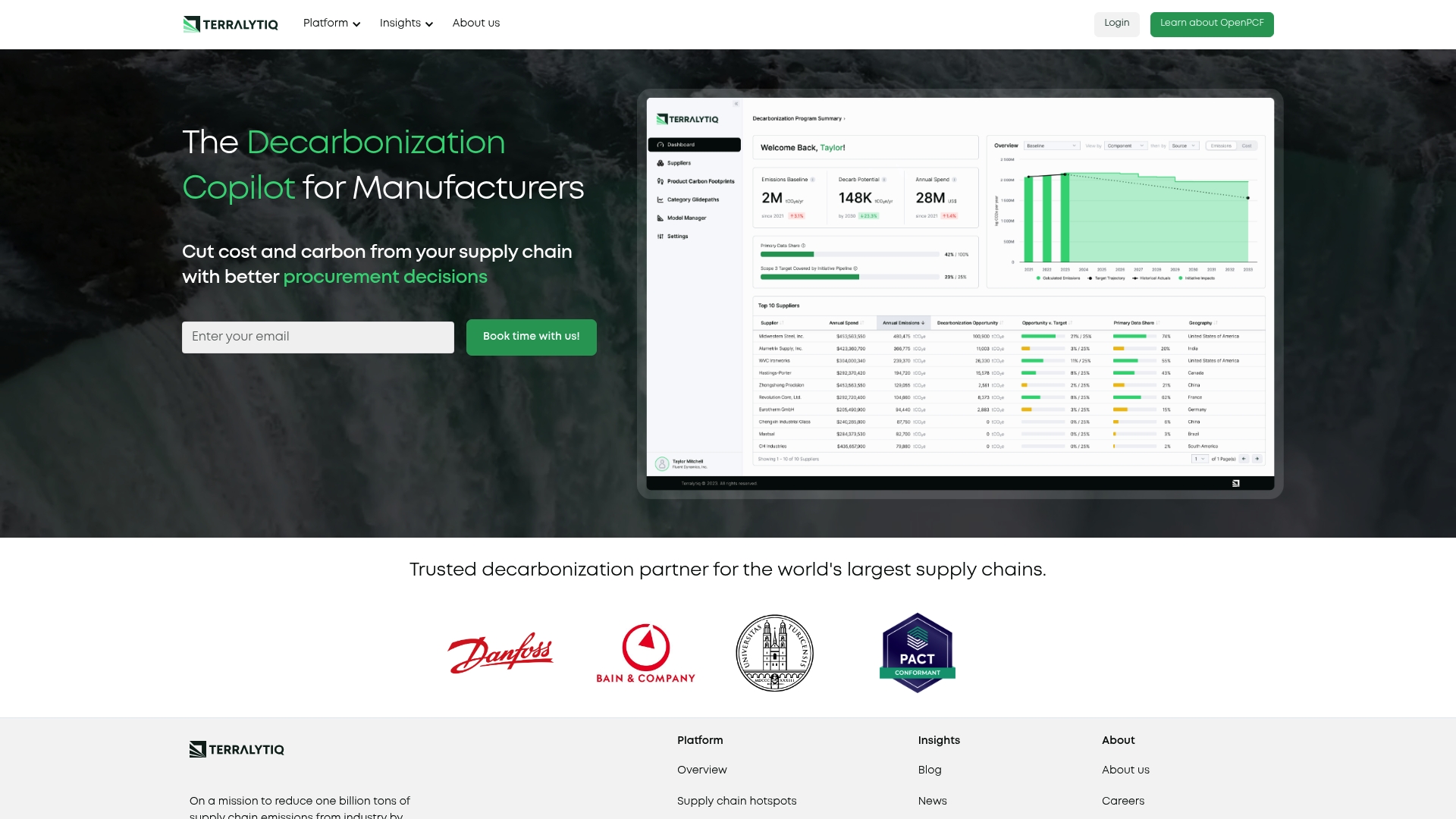
Terralytiq helps large manufacturers pinpoint where procurement drives the highest emissions and cost. The platform combines supply chain hotspots analysis with supplier outreach and Scope 3 data to convert insight into action.
This is a practical tool for supply chain teams that need measurable emission reductions and clearer procurement decisions within complex supplier networks.
Core Features
Terralytiq focuses on four core capabilities that drive supply chain decarbonization for large manufacturers.
- Supply chain hotspots analysis that identifies high-impact categories and suppliers.
- Supplier engagement tools to collect primary data and align suppliers with decarbonization goals.
- Decarbonization roadmaps that turn data into prioritized action plans.
- OpenPCF integration to connect with established carbon data standards.
Pros
-
Trusted by large companies: The platform is positioned for extensive supply chains, which means it serves complex procurement structures and high-volume supplier networks well.
-
Comprehensive data-driven solutions: Terralytiq brings analytics, primary supplier data, and actionable roadmaps together so decisions are based on measurable inputs rather than estimates.
-
Ambitious mission focus: The company aims to cut one billion tons of supply chain emissions by 2030, reflecting long-term commitment and sector credibility.
-
Modular platform offerings: Multiple solutions cover hotspots, engagement, and decarbonization, allowing teams to pick the tools that match their maturity level.
-
Strong external engagement: The product integrates with known sustainability frameworks and works with established organizations, which helps with reporting and external validation.
Cons
-
Limited pricing transparency: Public information does not detail licensing or subscription tiers, which makes budgeting and vendor comparison harder.
-
Sparse user experience detail: The provided content does not describe the interface or day-to-day workflows, so adoption effort and training needs are unclear.
-
Primarily for large supply chains: Smaller manufacturers with simpler supplier bases may find the platform more capability than they need and potentially costlier to deploy.
Who It’s For
Terralytiq is best for large manufacturing companies and supply chain managers who must reduce Scope 3 emissions and make procurement decisions that lower both carbon and cost. It suits organizations with multiple suppliers and a need for primary supplier engagement.
Unique Value Proposition
Terralytiq combines primary supplier data with analytic hotspots and roadmaps, enabling procurement teams to act on supplier-level insights rather than rely on generic factors. That linkage from data to supplier engagement is where it stands out.
Real World Use Case
A manufacturing firm uses Terralytiq to find a handful of supplier categories responsible for most upstream emissions. The firm then collects primary data from those suppliers and implements a decarbonization roadmap that lowers emissions and reduces procurement costs over time.
Pricing
Pricing is not specified in the provided content, so procurement teams should request a tailored quote and compare total cost of ownership against implementation scope and supplier count.
Website: https://www.terralytiq.com
Carbon Analytics
At a Glance
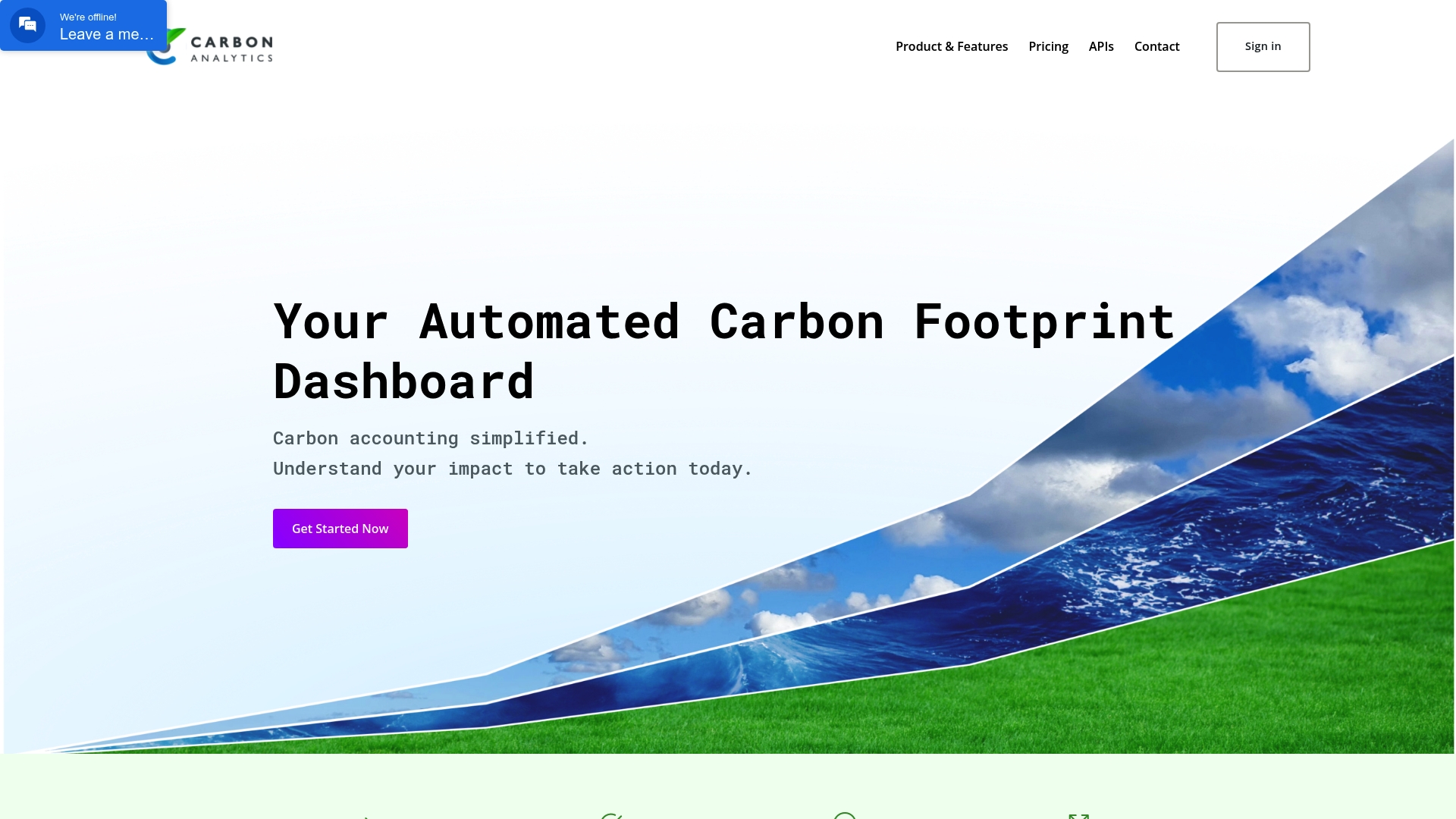
Carbon Analytics automates carbon footprint tracking by pulling data directly from accounting systems to produce actionable emissions figures. It suits businesses that need transparent reporting, verified badges, and supply chain collaboration to support a low carbon transition.
Core Features
The platform centers on automatic carbon footprint measurement and direct integration with accounting software to reduce manual data entry and errors. It offers full coverage across Scope 1, 2, 3 to support comprehensive accounting and reporting.
- Automatic carbon footprint measurement from accounting data
- Integration with accounting software such as Xero
- Full supply chain emissions accounting for Scope 1, 2, 3
- Certification and badge programs for verified achievements
- Custom reporting and analytics in enterprise plans
Pros
-
Automates complex measurement processes. The platform converts accounting entries into emissions data, saving finance teams time and lowering reporting costs.
-
Supports businesses of all sizes. Tailored plans let startups scale while larger organizations access enterprise capabilities and custom analytics.
-
Provides verified certifications. Certification and badge programs help you communicate progress to customers, investors, and auditors.
-
Facilitates transparency with stakeholders. The supply chain accounting features support collaboration with suppliers and clearer stakeholder communication.
-
Offers comprehensive scope coverage. Tracking Scope 1, 2, and 3 in one system simplifies Net Zero strategy work and regulatory reporting.
Cons
-
Limited pricing detail in provided content. The summary lists price bands but lacks feature level comparisons for each plan which complicates direct budget planning.
-
API capabilities are not detailed. The information does not specify API limits, endpoints, or sample integrations which creates uncertainty for technical teams.
-
Potential complexity for smaller firms. Organizations without prior sustainability infrastructure may need onboarding support to map accounting data to emissions categories.
Who It’s For
Carbon Analytics fits companies seeking an automated and transparent carbon accounting solution to measure, improve, and communicate impact. It is especially relevant for mid size and large companies in Romania and France that must align reporting with corporate sustainability goals.
Unique Value Proposition
The platform combines accounting system integration with supply chain accounting and certification features to turn finance data into credible emissions statements. That blend makes it practical for reporting, procurement engagement, and verified disclosure to stakeholders.
Real World Use Case
A manufacturing company uses Carbon Analytics to track Scope 1, 2, and 3 emissions across operations and suppliers. The company produces verified sustainability reports and works with suppliers to reduce total footprint while improving transparency for investors.
Pricing
Plans range from £360 per year for startups to £24,995 per year for large enterprises. Detailed features per plan and enterprise options are available on the vendor website.
Website: https://www.co2analytics.com
Sustainability and ESG Platforms Comparison
Below is a detailed comparison table outlining the key features, pros, cons, and pricing information of sustainability and ESG platforms reviewed.
| Platform | Key Features | Pros | Cons | Pricing |
|---|---|---|---|---|
| ECONOS ESG Services | Carbon Footprint Calculation, ESG Reporting and Compliance, EcoVadis Certification Assistance, ESG Education | Expert sustainability methodologies, unified ESG service offering, proven industry expertise | Requires proposal for tailored pricing, mid-sized to large organizations | Pricing not listed online; tailored proposals available |
| Tracera | AI-Powered Data Centralization, Audit-Ready Reporting, Compliance Framework Support | Simplifies sustainability data management, scalable for enterprises, supports common reporting frameworks | Customization levels unclear, responsive customer support details unavailable | Pricing upon request |
| Green Project Technologies | Suite50 for Supplier Engagement, Carbon Accounting, and Decarbonization | Integrated decarbonization management, accessible renewable energy marketplace, audit-grade reporting | Onboarding complexity, integration specifications not detailed | Pricing upon request, tailored proposal necessary |
| ecozeAI | Automated Product Carbon Footprints, Lifecycle Analysis | Advanced AI functionality, rapid supplier analysis, visual analytics for decision-making | Pricing transparency not available, functional complexity needs onboarding | Pricing requires inquiry, custom estimation necessary |
| Terralytiq | Supply Chain Hotspots Analysis, Decarbonization Roadmaps, OpenPCF Integration | Tailored solutions for complex supply chains, high focus on supplier-level emissions reduction | High applicability to larger organizations, limited interface and workflow details | Pricing undisclosed, custom inquiry needed |
| Carbon Analytics | Automatic Carbon Footprint from Accounting Data, Certification Programs | Simplifies emissions data via accounting integration, offers certifications for visibility | Potential complexity for smaller businesses, API documentation not provided | £360/year for startups to £24,995/year for enterprises |
Find the Right Sustainability Partner to Meet Your ESG Goals
Choosing a sustainability platform can be overwhelming when you aim to improve carbon footprint reporting, ensure compliance with evolving EU regulations like CSRD, or prepare for certifications such as EcoVadis. Many organizations face challenges ensuring their teams can independently manage complex Scope 1, 2, and 3 emissions data without constant external help. ECONOS understands these pain points and offers a unique, training-first approach that builds your internal ESG capabilities while delivering precise compliance solutions.
What sets ECONOS apart?
- Expert support in carbon footprinting and ESG reporting tailored for midsize and large companies
- Practical workshops to reduce dependency on consultants
- Cutting-edge AI tools that streamline data collection and calculation
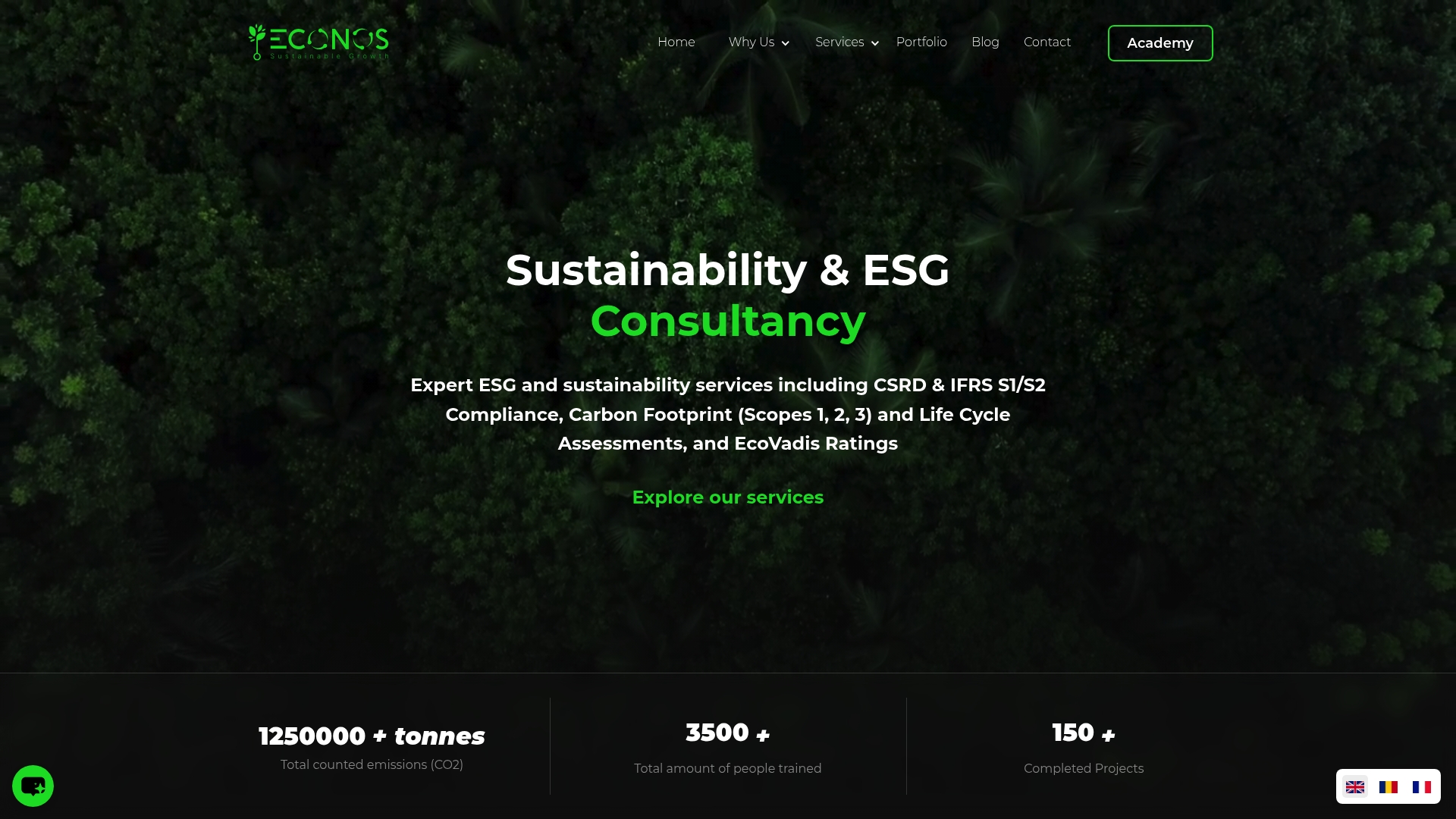
Ready to transform your sustainability program into a self-sufficient, compliant, and actionable success? Visit ECONOS ESG Services to learn how we empower your team to not just comply but lead in the ESG space. Take the next step today to secure your competitive advantage in sustainability.
Frequently Asked Questions
What are the main features to look for in alternatives to Positiongreen.com?
To find viable alternatives, focus on features like carbon footprint tracking, compliance reporting, and data integration capabilities. Evaluate tools based on how well they automate reporting processes and enhance user experience.
How do I compare pricing among different Positiongreen.com alternatives?
Start by creating a comparison chart that lists the pricing structures of each alternative, including any free trial offers or tiered pricing. This will help you identify which solution fits your budget while meeting your needs.
What should I consider when assessing the user interface of sustainability tools?
Assess the user interface for ease of navigation, clarity of data presentation, and accessibility of features. Conduct demo sessions or trials to gauge how intuitive the platform is for your team.
Can I integrate Positiongreen.com alternatives with existing systems?
Check if the alternatives offer API capabilities or direct integrations with your current software systems. Understanding integration options will help streamline the data flow and ensure a smoother transition.
How can I ensure the accuracy of the data provided by these alternatives?
Verify the accuracy by reviewing the methodologies employed for data calculations and seeking customer testimonials about reliability. Implement regular checks to cross-verify results, aiming for a margin of error no greater than 5%.
What are the benefits of using an alternative sustainability tool for my company?
Using an alternative sustainability tool can offer tailored features that better align with your specific operational needs, potentially improving efficiency and compliance efforts. Prepare to see a reduction in manual processes by automating at least 30% of reporting tasks.