
.png)

TL;DR:
- Most audits in environmental compliance often resemble document checks rather than genuine operational reviews, creating a false sense of security. To ensure true compliance, companies must understand the distinct scope and requirements of ISO 14001, EMAS, and legal audits, especially with upcoming EU regulation changes in 2026. Building an effective audit environment involves continuous evidence management, clear scope definition, and a focus on operational improvements rather than just passing point-in-time assessments.
Most environmental professionals have sat through an audit that felt more like a document-shuffling exercise than a genuine operational check. Permits got pulled, binders were reviewed, boxes were ticked, and everyone went home satisfied. But that kind of audit environment gives you a false sense of security. EU regulations are tightening, verification expectations are rising, and the gap between paper compliance and real compliance is exactly where enforcement actions are born. This guide cuts through the confusion and gives you a practical, regulation-grounded framework for managing your audit environment the right way.
Table of Contents
- Key Takeaways
- What an audit environment actually means
- The EU regulatory context shaping audits in 2026
- How to conduct an environmental audit: best practices and checklist
- Common pitfalls in managing your audit environment
- My perspective: audits as a compliance tool, not a compliance theater
- How Econos-esg supports your audit readiness
- FAQ
Key Takeaways
| Point | Details |
|---|---|
| Know your audit type | Distinguish between ISO 14001 internal audits and EMAS external verifications — they have different evidence expectations and scope. |
| EU rules are changing | Commission Implementing Regulation (EU) 2025/2546 introduces new site-visit conditions for GHG verification effective January 2026. |
| Checklists must cover operations | A strong environmental audit checklist goes beyond permits to include monitoring records, employee interviews, and calibration logs. |
| Spread evidence across the year | Distributing audit readiness tasks throughout the year produces more defensible evidence than last-minute document gathering. |
| Treat findings as improvements | Audit outcomes are most valuable when linked directly to corrective actions and management review cycles. |
What an audit environment actually means
The term “audit environment” is not just shorthand for the location where an audit takes place. It describes the full operational and organizational context within which an audit is designed, conducted, and evaluated. That includes the processes being assessed, the environmental aspects at play, the regulatory obligations in force, and the internal management structures that govern compliance. Getting this definition right shapes every decision you make about scope, sampling, and evidence.
For manufacturing, construction, and consumer goods companies, the audit environment typically spans multiple sites, regulatory permits, waste streams, and emissions sources. The scope must be defined before any checklist item is written.
There are two primary audit types that compliance officers in EU-regulated industries need to distinguish clearly:
- ISO 14001 internal audits: Governed by Clause 9.2, these confirm EMS conformity and operational implementation. They are self-administered and focus on whether the environmental management system is functioning as designed. Evidence requirements center on EMS effectiveness, not legal compliance per se.
- EMAS external verifications: These are third-party assessments against the EU Eco-Management and Audit Scheme. They evaluate legal compliance, public environmental statement accuracy, and site-level performance. The evidence bar is higher, and the scope includes regulatory adherence in ways that ISO 14001 internal audits do not.
- Compliance audits: These are purpose-built assessments that verify whether a facility meets specific legal requirements such as permit conditions, emissions limits, and waste handling rules. They often draw on an environmental audit checklist that maps each regulatory obligation to verifiable evidence.
Defining the audit scope clearly is non-negotiable. It determines which permits apply, which processes are sampled, which emissions sources fall inside or outside the audit boundary, and which employees are interviewed. Vague scope produces vague findings, and vague findings do not survive regulatory scrutiny.
The EU regulatory context shaping audits in 2026
EU regulations have become increasingly specific about what acceptable verification looks like, and 2026 brings notable changes for companies managing greenhouse gas emissions under EU oversight.

Commission Implementing Regulation (EU) 2025/2546 applies verification principles to GHG emissions from 1 January 2026. It formalizes a tiered site-visit structure that compliance officers need to plan around now, not at the start of the verification cycle.
The table below summarizes the core differences between site-visit options under EMAS and GHG verification frameworks:
| Site-visit type | When permitted | Documentation required |
|---|---|---|
| Physical visit | First verification year; at least every two years | Standard audit evidence and signed verifier report |
| Virtual visit | After prior physical visit; conditions met | Risk analysis, technology justification, verifier decision log |
| Waived visit | Strict conditions, documented risk assessment | Written justification; verifier must document rationale |
The key compliance insight here is that virtual or waived visits are not defaults. They are conditional, and the conditions must be documented through a formal risk-based analysis. Companies that assume a virtual visit is available simply because they had a clean prior audit are taking a significant risk.
For ISO 14001, Clause 9.2 requires an internal audit program that covers the full EMS scope at planned intervals. The program must give priority to processes with significant environmental aspects and areas of legal compliance concern. Results feed directly into the management review process under Clause 9.3, which means internal audits are not standalone events. They are part of a continuous improvement loop that external verifiers will check is actually functioning.
Pro Tip: Map your audit program to your significant environmental aspects register before you finalize audit scope and frequency. Audits that sample heavily in low-risk areas while skipping high-impact processes are a red flag for external verifiers.
How to conduct an environmental audit: best practices and checklist
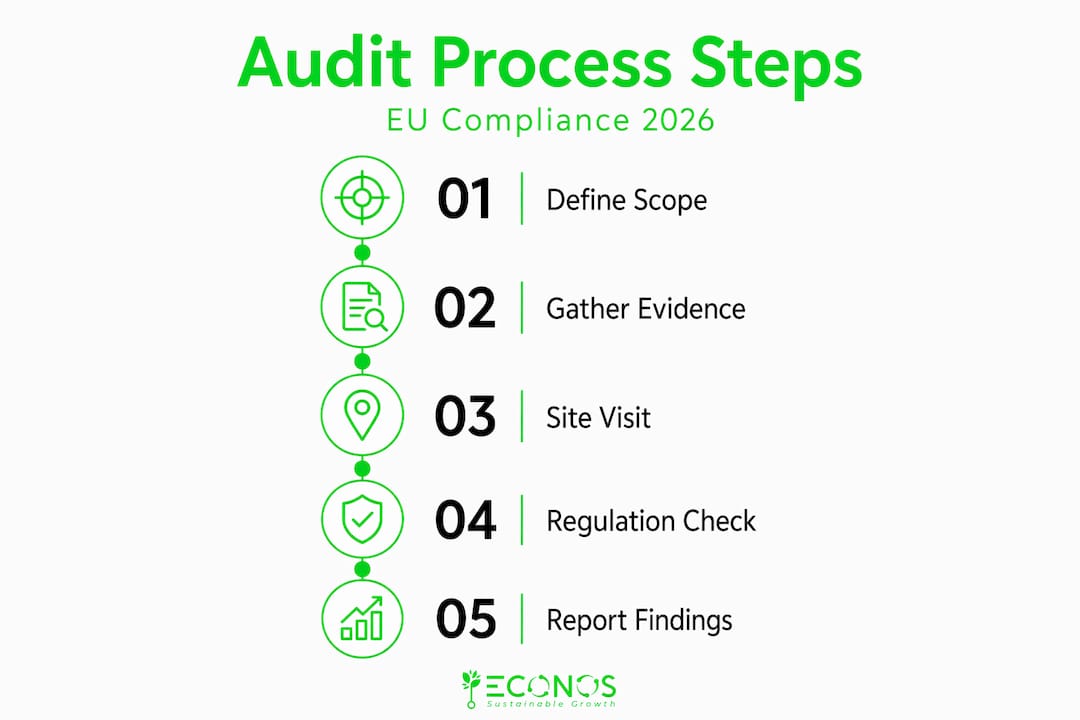
Knowing how to conduct an environmental audit well requires more than downloading a checklist template. The checklist is a starting point, not a guarantee of thoroughness. Here is a structured approach grounded in what actually holds up under regulatory and third-party scrutiny.
-
Build a complete permit inventory. Map every permit and approval to its specific emission source or waste stream. Incomplete permit inventories are one of the most common reasons audits fail. Include permit numbers, expiry dates, issuing authority, and the conditions attached. Superseded or modified permits need to be flagged separately so auditors know what version is currently in force.
-
Verify monitoring, testing, and calibration records. Check that monitoring plans are current and that measurement equipment has been calibrated within the required intervals. Cross-reference recorded data against permit limits and reporting submissions. Gaps in calibration logs create evidentiary holes that are hard to close retroactively.
-
Review submitted reports and regulatory correspondence. Pull annual environmental reports, emissions declarations, and any correspondence with regulatory authorities. Confirm that submissions were made on time and that any required follow-up actions were completed. Late or missing submissions are compliance failures regardless of how good your underlying data is.
-
Conduct structured employee interviews. Select interviewees by role and shift, not just by seniority. A compliance officer might describe waste handling procedures perfectly. The operator on the night shift might tell a different story. Interview staff in waste management, spill response, and environmental monitoring roles specifically. The goal is to confirm that procedures are understood and executed, not just documented.
-
Triangulate documentation against observed practice. Do not accept that a procedure exists because it is written down. Verify that it is followed by comparing records, physical observations, and interview responses. Treating audits as mere paperwork is precisely the failure mode that allows operational non-compliance to persist under a clean-looking document trail.
-
Document findings with evidence references. Every finding, whether conformity or non-conformity, must be traceable to specific evidence. Auditors who write “procedures appear to be followed” without citing records or interview references produce an environment audit report that cannot withstand scrutiny. Specificity is protection.
For practical guidance on structuring these steps across your team, the EHS auditing guide from Econos-esg covers the procedural framework in detail.
Common pitfalls in managing your audit environment
Even experienced compliance teams fall into patterns that undermine audit effectiveness. Recognizing these pitfalls is the first step toward building an audit environment that produces genuinely reliable results.
- Treating the audit as a point-in-time event. Audit readiness is a year-round discipline, not a sprint that starts three weeks before a verifier arrives. Distributing evidence production throughout the year produces a more defensible audit trail and reduces the pressure that leads to rushed or incomplete evidence packages.
- Letting the permit inventory go stale. Permits get modified, conditions get updated, and new regulatory requirements come into force. A permit inventory that was accurate twelve months ago may have three outdated entries today. Assign ownership of the permit registry to a named individual and set calendar reminders for expiry reviews.
- Failing to communicate audit scope to site management. Audits that arrive without clear communication of scope and timeline generate resistance, incomplete cooperation, and gaps in evidence access. Management needs to understand what the audit is checking, why it matters, and what their specific role is in facilitating it.
- Confusing ISO 14001 conformity with legal compliance. Your EMS can be fully conformant with ISO 14001 requirements while a specific permit condition is being violated. The two assessments measure different things. Compliance officers who conflate them are exposed to regulatory action that their EMS certification will not protect them from.
- Producing evidence in bulk at audit time. Last-minute document compilation raises red flags. Verifiers and auditors know that evidence produced in a rush tends to lack the consistency, timestamps, and cross-references that naturally accumulate over time. Authentic compliance produces authentic records.
Pro Tip: Build a shared audit evidence folder that teams update monthly, not annually. When the audit arrives, your evidence is already organized, time-stamped, and traceable. This single habit reduces audit preparation time significantly and improves the quality of your environment audit report.
For further reading on maintaining continuous compliance evidence, the supply chain audit guide from Econos-esg addresses evidence continuity in multi-site and multi-supplier contexts.
My perspective: audits as a compliance tool, not a compliance theater
I’ve seen companies spend considerable effort preparing for audits and almost none maintaining the conditions those audits are supposed to verify. That gap is not a minor inefficiency. It’s the difference between a company that is compliant and a company that performs compliance once a year.
What I’ve learned working with manufacturing and construction clients on EU regulatory requirements is that the audit environment is a mirror. It reflects the quality of your operational controls, your documentation culture, and your management commitment to environmental accountability. An audit that consistently produces clean results without any findings is not a sign of excellence. It’s often a sign that the scope is too narrow or the evidence bar is too low.
The EU regulatory shift under regulations like Commission Implementing Regulation (EU) 2025/2546 is pulling verification standards upward. Virtual and waived site visits being conditional rather than default is a deliberate policy signal. Regulators want physical verification of high-risk installations. Companies that push for virtual visits without the documented justification to support them are creating future liability.
My honest recommendation: treat every internal audit finding as an improvement signal, not an embarrassment. The importance of audit in environment management is not in the certificate at the end. It’s in the operational discipline it builds along the way. Companies that use audit findings to drive corrective action cycles, update their significant aspects registers, and revise procedures based on what auditors actually observed are the ones that hold up under external scrutiny without fear.
— Mathieu
How Econos-esg supports your audit readiness
Building a credible audit environment takes more than good intentions. It takes structured data management, regulatory knowledge, and the capacity to translate audit findings into corrective actions that stick. Econos-esg works with manufacturing, construction, and consumer goods companies across Romania, France, and Vietnam to build exactly that capacity.
Our carbon footprint assessment services produce the verified Scope 1, 2, and 3 data that auditors and verifiers expect to see in your environmental evidence package. Our ESG reporting support covers CSRD and ESRS alignment, helping your compliance team produce reports that meet the evidentiary standards external verifiers apply. For companies working toward EU Taxonomy alignment or EcoVadis certification, we build the internal processes that make audit readiness a continuous state rather than a periodic scramble. If you’re ready to treat your audit environment as a real compliance asset, we’d like to help.
FAQ
What is an audit environment in EU compliance?
An audit environment refers to the full operational and regulatory context within which an environmental audit is designed and conducted, including processes, permits, environmental aspects, and management structures. For EU-regulated companies, it defines the scope of what is verified under EMAS, ISO 14001, or GHG verification frameworks.
How often are physical site visits required under EMAS?
Under EMAS rules and Commission Implementing Regulation (EU) 2025/2546, a physical site visit is required in the first verification year and at least once every two years. Virtual or waived visits are allowed only under documented conditions with prior physical visit history.
What should an environmental audit checklist include?
A strong environmental audit checklist covers permit inventory and expiry status, monitoring and calibration records, regulatory report submissions, employee interviews by role and shift, and triangulated documentation against observed practice.
What is the difference between ISO 14001 and EMAS audits?
ISO 14001 internal audits confirm that the environmental management system is conformant and functioning. EMAS external verifications assess legal compliance, public reporting accuracy, and site-level environmental performance, with a higher and more specific evidence standard.
How do you improve audit readiness year-round?
The most effective approach is to distribute evidence production across the calendar year through monthly record updates, permit expiry reviews, and regular employee procedure checks. This produces a naturally consistent evidence trail that is far more defensible than last-minute document compilation.