
.png)

TL;DR:
- Environmental exploitation involves the unsustainable extraction of natural resources that causes irreversible damage to ecosystems and biodiversity. It disproportionately affects vulnerable populations, increases health risks, and accelerates climate change through targeted commodities like gold, palm oil, and soy. Effective mitigation requires integrating ecological data, community involvement, and corporate accountability across supply chains and policies.
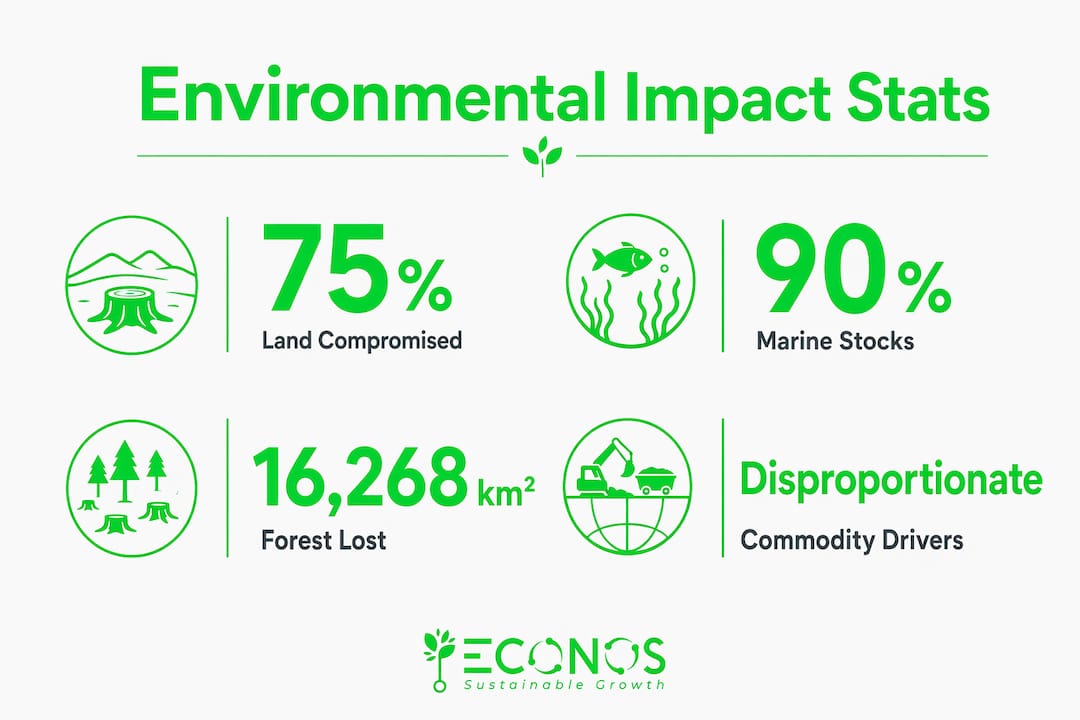
Exploitation of the environment is defined as the unsustainable extraction and use of natural resources at rates that exceed ecological recovery, causing irreversible degradation across land, water, and biodiversity systems. The scale is not abstract. 75% of Earth’s land surface has been significantly altered by human activity, 85% of wetlands have been lost or degraded, and 90% of global marine fish stocks are fully exploited or depleted. These numbers represent a compounding crisis that regulators, corporate sustainability managers, and environmental advocates can no longer treat as background noise. The consequences cut across ecosystem health, public welfare, economic stability, and corporate liability simultaneously.
What are the main types of exploitation of environment?
Environmental exploitation, the term used interchangeably with unsustainable resource use in academic and policy literature, takes several distinct forms. Mining, industrial agriculture, overfishing, deforestation, and large-scale pollution each operate through different mechanisms but converge on the same outcome: ecosystem collapse and biodiversity loss.
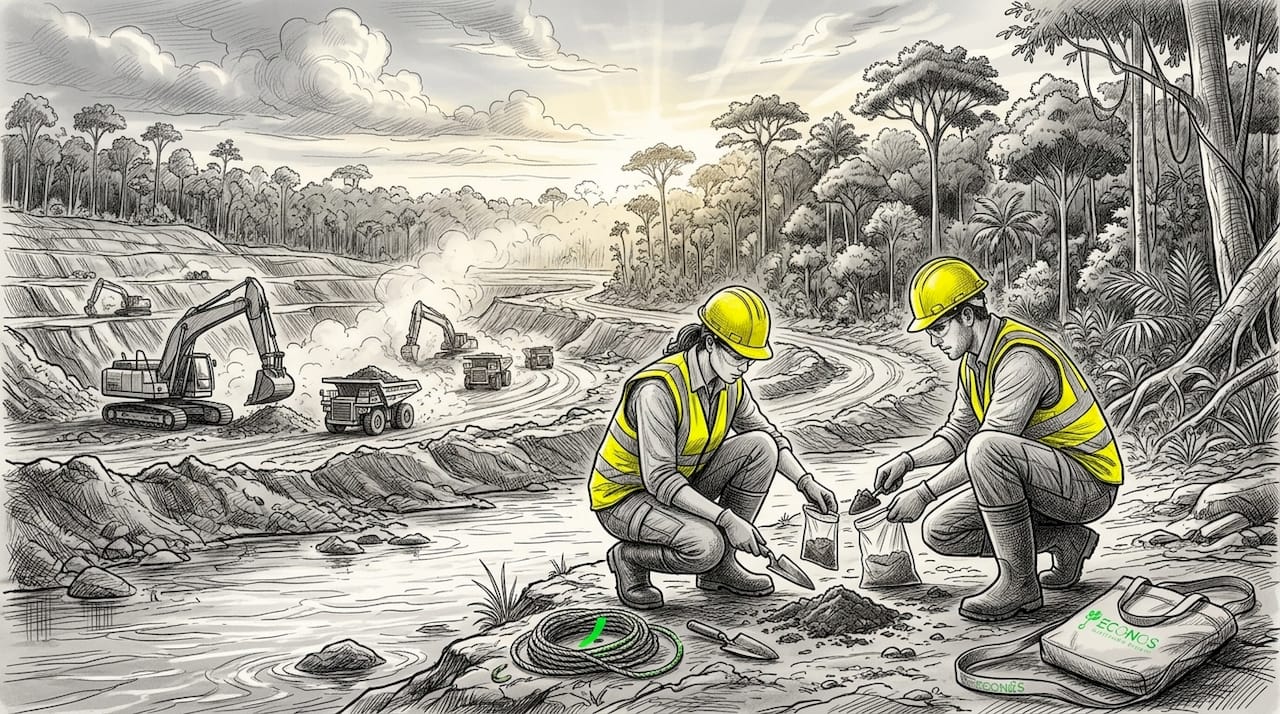
Mining is one of the most spatially concentrated drivers. Mining activities from 2001 to 2022 removed 16,268 km² of forest globally, with over 65% of that loss occurring in tropical rainforests. Half of this deforestation was linked to just five commodities: gold, coal, aluminum, nickel-cobalt, and copper. That concentration matters because it tells us where intervention will have the greatest return.
Deforestation driven by agriculture expansion compounds the problem. The impact of deforestation extends beyond tree loss to include habitat fragmentation, disruption of water cycles, and accelerated soil erosion. Wetlands, which filter water and buffer floods, have been reduced to a fraction of their historical extent. Marine ecosystems face parallel pressure from overfishing, which removes apex predators and destabilizes food webs that took millennia to form.
Pro Tip: When conducting environmental due diligence, map your supply chain’s commodity exposure against known high-deforestation risk zones using tools like Global Forest Watch or the Trase platform. This converts abstract risk into auditable data.
| Exploitation type | Primary ecosystem impact | Key commodity or driver |
|---|---|---|
| Mining | Tropical deforestation, soil contamination | Gold, coal, copper |
| Industrial agriculture | Habitat loss, water depletion | Palm oil, soy, beef |
| Overfishing | Marine food web collapse | Tuna, cod, shrimp |
| Pollution | Freshwater and soil toxicity | Plastics, agrochemicals |
| Urban expansion | Wetland and forest fragmentation | Infrastructure, real estate |
How does environmental exploitation affect human health and society?
The social cost of natural resource depletion is not distributed evenly, and that asymmetry is where the real policy failure lives. 3.2 billion people, representing 40% of the global population, are adversely affected by land degradation. 2.1 billion lack access to safely managed drinking water, and 1,000 children under five die every day from water-related illness. These are not projections. They are current conditions.
The consequences of pollution and habitat loss extend directly into public health through disease dynamics. Environmental degradation from deforestation increases the risk of zoonotic disease spillover by intensifying human-wildlife contact at forest edges. As natural buffers disappear, pathogens that once circulated in isolated wildlife populations find new human hosts. COVID-19 is the most cited example, but the underlying mechanism applies to Ebola, Nipah, and dozens of emerging viral threats.
The social justice dimension is equally urgent:
- Indigenous communities lose territorial rights and food sovereignty when extractive industries expand into ancestral lands without free, prior, and informed consent.
- Women and subsistence farmers bear disproportionate burdens when water sources degrade, since they typically manage household water collection in affected regions.
- Landless rural workers face livelihood collapse when deforestation eliminates the ecosystem services their livelihoods depend on.
- Urban poor populations absorb the highest concentrations of air and water pollution due to proximity to industrial zones and limited political recourse.
“Overconsumption and wealth disparities redistribute disaster risk so that those who benefit least from resource use often bear the greatest environmental burdens.” — PreventionWeb, 2026
Removing natural defenses accelerates this vulnerability. Mangroves and forested slopes act as physical barriers against floods and landslides. When they are cleared, communities lose protection that no gray infrastructure can fully replicate at equivalent cost.
What trade-offs complicate sustainable resource management?
Sustainable resource management is not a clean optimization problem. The trade-offs between economic development and ecological preservation are real, and pretending otherwise produces policies that fail on implementation.
Indonesia illustrates this tension precisely. Extraction-driven deforestation in Indonesia increases regional income and generates government revenue, but simultaneously exacerbates food insecurity and livelihood losses for women, indigenous peoples, and landless farmers. The economic gains are concentrated; the social costs are dispersed. This pattern repeats across palm oil in Malaysia, soy in Brazil, and cobalt mining in the Democratic Republic of Congo.
Commodity-specific impacts vary significantly, which makes generalized environmental policy less effective than targeted intervention. Clearing land for industrial commodities causes twice the local warming effect compared to small-scale shifting agriculture. That distinction matters for climate modeling, carbon accounting, and regulatory design. A policy that treats all land clearing identically will misallocate both incentives and penalties.
Governance failures compound the problem. Top-down conservation programs that exclude local communities consistently underperform. The Integrated Conservation and Development Projects of the 1990s, implemented across Africa and Asia, largely failed because they imposed external priorities without addressing local economic realities. Participatory forest management models in Nepal and community-based marine protected areas in the Philippines have produced more durable outcomes precisely because they align conservation incentives with local livelihoods.
Pro Tip: Before designing a supplier sustainability program, segment your supply base by commodity type and geography. A palm oil supplier in Sumatra carries fundamentally different environmental and social risk than a steel supplier in Poland. Treat them accordingly in your ESG due diligence process.
What strategies effectively reduce exploitation of natural resources?
Mitigation requires working at multiple scales simultaneously: corporate operations, supply chains, regulatory frameworks, and community systems. No single lever is sufficient.
-
Deploy nature-based solutions at scale. Mangrove restoration, agroforestry, and community forest management effectively reduce environmental exploitation while supporting local livelihoods. These are not soft alternatives to hard infrastructure. In Beira, Mozambique, combined green and gray infrastructure increased community resilience to cyclone-related flooding in ways that seawalls alone could not achieve.
-
Prioritize high-impact commodities in supply chain programs. Sustainability efforts concentrated on gold, palm oil, soy, and beef will address a disproportionate share of global deforestation and water depletion. Generalized supplier codes of conduct without commodity-specific targets produce compliance theater, not measurable impact. Sustainable supply chain practices require granular data, not broad commitments.
-
Integrate carbon footprint assessment into procurement decisions. Scope 3 emissions, which include supplier-level land use change and resource extraction, are where most corporate environmental impact actually lives. Measuring and disclosing these emissions creates accountability and surfaces the highest-risk relationships in a supply chain.
-
Advance corporate ESG reporting beyond direct operations. Corporate ESG reporting that tracks indirect impacts and legacy liabilities is critical for holding companies accountable for environmental exploitation outside their direct control. CSRD and ESRS frameworks now require exactly this kind of extended disclosure, and companies that have not built the data infrastructure to support it face significant compliance risk.
-
Protect and involve affected communities in governance. Conservation strategies that exclude indigenous peoples and local communities fail at higher rates and generate social conflict. Free, prior, and informed consent is not a procedural checkbox. It is a prerequisite for durable environmental outcomes. Regulators designing protected area frameworks or companies negotiating land-use agreements should treat community participation as a non-negotiable design element, not an afterthought.
Key takeaways
Addressing the exploitation of environment requires integrating ecological data, social equity, and corporate accountability into a single coherent framework rather than treating each as a separate discipline.
| Point | Details |
|---|---|
| Scale of exploitation | 75% of land and 90% of marine stocks are already compromised, making baseline measurement urgent. |
| Health and social costs | 3.2 billion people face land degradation impacts; vulnerable groups absorb the greatest burdens. |
| Commodity specificity matters | Industrial land clearing causes twice the warming of small-scale agriculture; target interventions accordingly. |
| Corporate accountability gap | ESG reporting must extend to indirect and legacy impacts, not just direct operational footprints. |
| Community-led solutions work | Participatory management models consistently outperform top-down conservation programs in durability. |
Why I think we’re still asking the wrong questions about environmental exploitation
Working with companies across manufacturing, finance, and retail on their environmental impact assessments, I keep running into the same blind spot. Organizations frame environmental exploitation as a compliance problem. They ask: “What do we need to disclose?” when the more useful question is: “What are we actually causing, and where?”
The offsite infrastructure linked to mining, for example, causes secondary deforestation that rarely appears in standard impact assessments. A company buying copper components has no idea that the road built to service the mine cleared an additional 30 kilometers of forest beyond the mine boundary itself. That impact is real, it is attributable, and it is invisible in most current reporting.
I am genuinely optimistic about the direction of CSRD and ESRS, because they push companies toward exactly this kind of extended accountability. But the data infrastructure most companies have today is not built for it. They are trying to answer 2026 regulatory questions with 2018 data systems. That gap is where Econos-esg spends most of its time, helping clients build the internal capacity to measure what they are actually responsible for, not just what is easy to count.
The other thing I would push back on is the tendency to treat environmental and social impacts as separate workstreams. The evidence is clear: land degradation drives water insecurity, which drives disease risk, which drives social instability. These are not parallel tracks. They are one system. The companies and regulators that will make real progress in the next five years are the ones who stop siloing their environmental and social data and start reading them together.
— Mathieu
How Econos-esg helps companies address environmental exploitation risks
Measuring environmental exploitation starts with knowing what your organization is actually responsible for. Econos-esg helps mid-size and large companies build that picture through carbon footprint assessment covering Scope 1, 2, and 3 emissions, including supply chain land use and resource extraction impacts. For companies navigating CSRD compliance, Econos-esg’s ESG reporting services translate regulatory requirements into auditable data systems your team can operate independently. Clients like Michelin, eMAG, and Raiffeisen Bank have used this approach to move from reactive compliance to proactive risk management. If you are ready to understand your environmental footprint rather than just report it, Econos-esg builds that capacity inside your organization.
FAQ
What is the exploitation of environment?
Exploitation of the environment refers to the unsustainable extraction and use of natural resources at rates that exceed ecological recovery, causing permanent damage to land, water, and biodiversity systems. It encompasses mining, deforestation, overfishing, pollution, and industrial agriculture.
How does environmental degradation affect human health?
Environmental degradation increases exposure to contaminated water, reduces food security, and raises the risk of zoonotic disease spillover by pushing humans and wildlife into closer contact. Currently, 1,000 children under five die daily from water-related illness linked to degraded ecosystems.
Which commodities drive the most environmental exploitation?
Gold, coal, palm oil, soy, and beef are responsible for a disproportionate share of global deforestation and ecosystem loss. Industrial commodity-driven land clearing causes twice the local warming effect of small-scale agriculture, making these the highest-priority targets for supply chain sustainability programs.
What role does ESG reporting play in reducing environmental exploitation?
ESG reporting frameworks like CSRD and ESRS require companies to disclose indirect and legacy environmental impacts beyond direct operations, creating accountability for supply chain deforestation, resource depletion, and pollution. Tracking these extended impacts is the foundation of credible corporate environmental management.
What conservation strategies have proven most effective?
Community-based approaches including participatory forest management, mangrove restoration, and agroforestry consistently outperform top-down conservation programs. Nature-based solutions that align ecological goals with local livelihoods produce more durable outcomes and greater biodiversity protection over time.