
.png)

TL;DR:
- Companies must inventory all emissions and align reduction strategies with broader business goals.
- Prioritize energy efficiency, renewable procurement, and process electrification in a sequential manner.
- Accurate, verified reporting and careful use of market mechanisms are essential for compliance and credibility.
Sustainability and compliance managers across Romania and Europe are under more pressure than ever. The EU Emissions Trading System has halved covered emissions since 2005 and is targeting a 62% cut by 2030, and regulators are not slowing down. At the same time, major clients and procurement teams are demanding verified, documented emissions performance before signing contracts. Failing to act is no longer just an environmental concern. It is a business risk. This guide walks you through building a credible strategy, deploying the most impactful interventions, using market mechanisms responsibly, and verifying everything in a way that holds up to regulatory and client scrutiny.
Table of Contents
- Setting up your carbon reduction strategy
- Deploying high-impact emissions reduction actions
- Utilizing market-based mechanisms and removals responsibly
- Measuring, monitoring, and verifying your reductions
- What most emissions reduction guides get wrong
- Take the next step toward compliance and leadership
- Frequently asked questions
Key Takeaways
| Point | Details |
|---|---|
| Strategic preparation | Build strong emissions inventories and align targets with EU regulatory frameworks before acting. |
| Prioritize direct reductions | Invest first in efficiency, renewables, and electrification rather than offsets or removals. |
| Approach removals with caution | Treat carbon removals and offsets as supplementary, understanding their risks of non-permanence and integrity shortfalls. |
| Verification is essential | Use accurate monitoring, reporting, and verification tools to sustain credibility and compliance. |
| Partner for success | Expert support can streamline compliance, access incentives, and maximize ROI on reduction efforts. |
Setting up your carbon reduction strategy
With rising regulatory expectations, the first step is a strategic foundation. Before you can reduce emissions, you need a clear picture of what you are actually emitting and where it comes from.
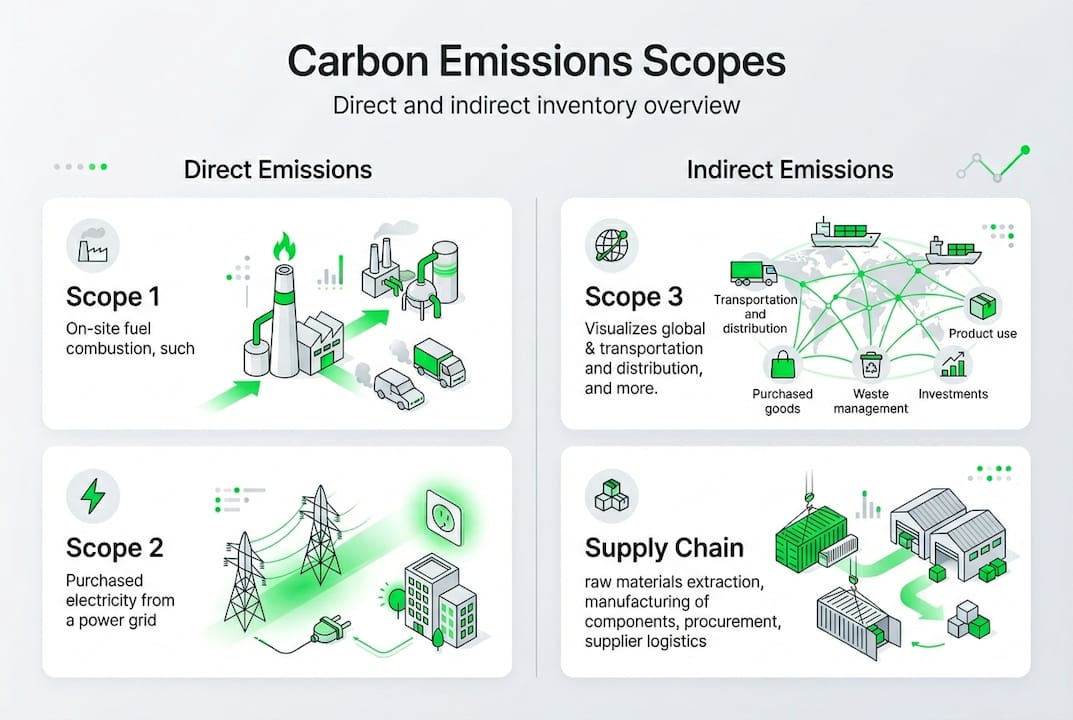
Start by inventorying all your direct and indirect emissions. Scope 1 covers emissions from sources you own or control, such as company vehicles and on-site boilers. Scope 2 covers purchased electricity and heat. Scope 3 is broader and includes upstream and downstream activities across your supply chain. For Romanian firms specifically, Scope 3 often holds the largest share of total emissions and the greatest opportunity for reduction.
Next, map your company against applicable EU frameworks. If you operate facilities that exceed 25,000 tonnes of CO2 equivalent annually, you fall under the EU ETS. Under Commission Regulation (EU) 2018/2066, monitoring must be based on activity data, approved emission factors, and defined tiers that ensure accuracy. Smaller emitters below this threshold may qualify for simplified equivalent measures, but you still need documented monitoring.
Here is a simple way to frame your foundational data needs:
| Data type | Example | Why it matters |
|---|---|---|
| Activity data | Fuel consumption (liters/MWh) | Basis for emission calculations |
| Emission factor | CO2 per unit of fuel | Converts activity to emissions |
| Monitoring tier | Tier 1 to 4 | Determines required accuracy level |
| Boundary definition | Sites, operations included | Ensures complete, consistent reporting |
Once your data is in order, align reduction targets with your broader business strategy. Companies that treat emissions targets as isolated compliance tasks almost always underperform. Instead, connect them to cost reduction goals, export compliance requirements, and ESG reporting obligations under frameworks like ESRS.
Finally, build a cross-functional team. Finance, operations, procurement, and legal all need to be involved. Accuracy in carbon accounting requires data from across the organization, and buy-in is easier when each team understands how their role contributes to the result.
Pro Tip: Assign a dedicated internal carbon data owner for each major facility or business unit. This single step reduces data collection errors by more than half in most organizations we work with.
Deploying high-impact emissions reduction actions
With a foundation in place, it is time to select and execute the interventions most likely to deliver compliance and market value.

Research consistently shows that the EU ETS cap-and-trade mechanism induces 14 to 16% emissions reductions in regulated firms through targeted investment, without causing economic contraction or carbon leakage. The key word is targeted. Not every intervention delivers equal results.
Here is a comparison of common actions to help you prioritize:
| Action | Typical emissions impact | Investment level | Payback timeline |
|---|---|---|---|
| LED lighting and HVAC upgrades | 5 to 15% facility reduction | Low | 1 to 3 years |
| On-site solar PV | 20 to 40% electricity reduction | Medium | 4 to 7 years |
| Process electrification | 30 to 60% where feasible | High | 5 to 10 years |
| Renewable energy contracts (PPAs) | Immediate Scope 2 reduction | Low to medium | Immediate |
| Logistics optimization | 10 to 20% transport reduction | Low | 1 to 2 years |
A practical sequence matters. Start with energy efficiency measures because they reduce your baseline, which makes everything else cheaper. Then layer in renewable energy procurement. Only after those quick wins should you invest heavily in process electrification or major equipment replacements.
Here is a recommended sequencing approach for most mid-size Romanian and European manufacturers:
- Conduct an energy audit across all facilities to identify the highest-consumption processes.
- Implement no-cost and low-cost efficiency fixes first, such as behavioral changes and leak repairs.
- Procure renewable electricity through a power purchase agreement or green tariff to reduce Scope 2 emissions immediately.
- Evaluate equipment electrification opportunities where natural gas or diesel can be replaced with electric alternatives.
- Apply for EU Innovation Fund or state aid resources to co-finance larger capital investments.
For a more detailed breakdown of practical emission reduction steps and how to prioritize them within your specific industry context, that process is worth working through carefully before committing capital. You can also explore carbon reduction consulting options to understand what external support looks like.
Pro Tip: Do not overlook Scope 3 logistics. Many Romanian manufacturers find that optimizing inbound freight schedules, consolidating shipments, or switching to rail freight for certain routes can cut transport-related emissions by 15% or more within twelve months.
Utilizing market-based mechanisms and removals responsibly
Alongside direct interventions, many companies look to market mechanisms and removals. These have real benefits but also real compliance nuances.
The EU ETS requires covered entities to surrender allowances equal to their verified annual emissions. If your emissions fall below your allocated allowances, you can sell the surplus. If they exceed your allocation, you must purchase additional allowances on the market. Managing this position well requires active monitoring of your emissions trajectory and allowance inventory throughout the year.
Best practices for allowance management include:
- Monitor your actual emissions against your allocation monthly, not just at year-end.
- Avoid over-purchasing allowances speculatively. Hold what you need, with a reasonable buffer.
- Document all surrender and acquisition transactions for audit purposes.
- Work with a qualified advisor before entering the secondary market for allowances.
Beyond allowances, you may encounter carbon removals. The EU’s Carbon Removal Certification Framework, or CRCF, certifies permanent removals such as direct air carbon capture and storage, bioenergy with carbon capture, and enhanced weathering, alongside carbon farming activities in mineral soils and peatlands. Methodologies were formally adopted in February 2026.
But here is the honest truth about removals:
Removals should complement real reductions, never replace them. Even CRCF-certified units carry risks of non-permanence, non-additionality, and over-crediting. The EU regulatory direction is clear: internal abatement first, removals as a supplement.
When evaluating certifying carbon removals or building an offset strategy, ask three questions. First, can the reduction be verified? Second, would it have happened anyway without the carbon payment? Third, is the storage genuinely permanent? If you cannot answer all three confidently, the credit carries integrity risk.
Measuring, monitoring, and verifying your reductions
With reduction actions implemented, the final step is credible, verifiable reporting and continuous improvement.
Proper documentation is not optional. Under EU ETS monitoring rules, every tonne of emissions must be supported by activity data, an approved emission factor, and a monitoring tier that matches your facility’s complexity and risk level. Errors here are the most common reason companies receive regulatory penalties.
Here is a step-by-step compliance reporting process:
- Collect and validate monthly activity data from all relevant sources: meters, invoices, purchase records.
- Apply approved emission factors from the EU’s official lists or country-specific defaults where permitted.
- Choose the correct monitoring tier. Higher tiers require more precision but reduce uncertainty and regulatory risk.
- Conduct an internal pre-audit review at least six weeks before your annual reporting deadline.
- Submit your Monitoring Plan updates to the competent authority whenever material changes occur.
- Engage an accredited verifier to provide independent assurance before final submission.
For demonstrating reductions specifically, track these data points with care:
- Baseline year emissions with a clearly documented methodology
- Year-on-year emissions by source category
- Additionality evidence for any project-based reductions claimed
- Investment records tied to specific reduction measures
Statistic callout: Companies that implement structured monitoring systems are significantly less likely to face corrective action requests from EU competent authorities than those relying on ad-hoc data collection.
For a full overview of the compliance process, including templates and regulatory timelines, it helps to have a structured starting point. Keep an eye on ESG regulatory updates since the landscape shifts frequently. Exporters in particular should review the exporters’ ESG guide to understand how CBAM and other border measures affect your reduction strategy.
What most emissions reduction guides get wrong
Stepping back, it is important to challenge a common misunderstanding baked into most carbon reduction guidance: the idea that offsets and reductions are functionally equivalent. They are not, and treating them as such carries serious regulatory and reputational risk.
We have seen companies invest heavily in carbon credits while their actual facility emissions remain flat. When their clients or regulators ask for evidence of real, lasting abatement, the credits do not hold up. The risks are well documented: non-permanence, non-additionality, and over-crediting are persistent problems even in regulated markets. The EU’s own guidance is unambiguous: prioritize reductions through the ETS mechanism before turning to removals.
Another frequent mistake is misreading the regulatory signal. Some managers assume that purchasing allowances or credits satisfies their clients’ ESG expectations. It does not. Procurement teams at large European corporations are increasingly asking for real-world compliance evidence tied to documented operational changes, not financial transactions.
The most durable reduction strategies we see work from the inside out: efficiency first, renewables second, and removals only as a carefully governed supplement. That sequence is not just good policy. It is good business.
Take the next step toward compliance and leadership
Applying these strategies takes more than a plan. It takes the right data infrastructure, the right team capacity, and a clear understanding of what regulators and clients actually need to see.
At ECONOS, we help mid-size and large companies across Romania and Europe move from carbon measurement to verified, documented reduction. Whether you need a carbon footprint assessment to establish your baseline, structured ESG reporting support to meet CSRD and client demands, or hands-on EU compliance consulting to navigate ETS and CRCF obligations, our team builds your internal capacity alongside every project. You will not need to call us every time a regulation changes. You will understand what to do and why.
Frequently asked questions
What are the most effective carbon emissions reduction actions for manufacturing firms?
Energy efficiency upgrades, switching to renewables, process electrification, and optimized logistics yield the greatest verified reductions for manufacturing. EU renewables reached 47.3% of electricity generation in 2025, showing just how rapidly the cost and availability of clean energy has shifted.
How does the EU ETS drive carbon reductions in Romania?
The EU ETS uses a cap-and-trade system that incentivizes regulated Romanian firms to invest in emissions-cutting technology. Research confirms it induces 14 to 16% emissions reductions in covered firms without causing economic contraction.
What risks are associated with using carbon removals and offsets?
Offsets carry significant risks including non-permanence and over-crediting. The Ethics and Risks of Carbon Removal Markets research makes clear that robust baselines, additionality evidence, and long-term liability frameworks must be in place for any removal credit to be genuinely valid.
How can reductions be verified for ESG and regulatory reporting?
Reductions must be documented with activity data, approved emission factors, and tier-based monitoring as required under Commission Regulation 2018/2066. Independent verification by an accredited third party is required for EU ETS compliance and increasingly expected for CSRD reporting.