
.png)
The role of responsabil de mediu, or Environmental Manager, used to be about keeping the company out of trouble. Today, it's a strategic business position, essential for navigating complex regulations, managing real-world risks, and creating tangible value. Real progress comes from execution, not just compliance.
Why the Responsabil de Mediu Is Now a Strategic Role
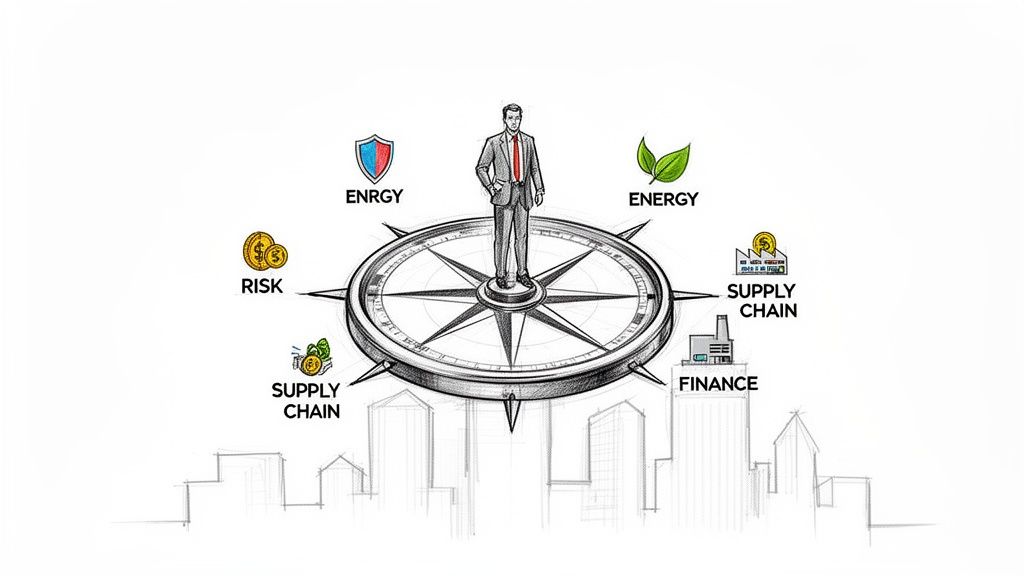
The traditional definition of a responsabil de mediu no longer applies. This is not just an officer ticking boxes for environmental permits. In a world shaped by new rules like the Corporate Sustainability Reporting Directive (CSRD), this person has become the company's navigator for environmental risk and opportunity.
We see this in client discussions every week: the role has shifted from a back-office function to a core part of business strategy. Their work directly impacts operational efficiency, cost reduction through smarter resource management, and building trust with both clients and investors.
From Compliance to Competitive Advantage
The conversation is no longer about simply avoiding fines but about proactively creating value. How does this look in practice for a modern Environmental Manager?
- Risk Management: They are on the front line, identifying risks tied to climate change, resource scarcity, and tightening regulations. This is not just about compliance; it's about protecting the company from financial penalties and operational disruptions.
- Cost Optimisation: By digging into energy bills and waste streams, they find the inefficiencies that drain profits. Their initiatives to reduce, reuse, and recycle translate directly into lower operational costs.
- Enhanced Competitiveness: Strong, verifiable environmental performance is becoming non-negotiable for winning tenders, especially within EU supply chains. It’s a powerful signal of operational excellence and reliability.
What this means for companies is a shift in mindset. A competent responsabil de mediu delivers the credible, audit-ready information needed to secure financing and favourable investment terms. Their value is measured in risk mitigated, costs saved, and trust built.
To fully understand this strategic shift, it's helpful to consult an ultimate guide to sustainability and responsibility which frames this work within broader Environmental, Social, and Governance (ESG) goals.
The table below illustrates just how much the role has evolved from its traditional roots.
This evolution shows that the Environmental Manager is no longer just a "cost centre" but a crucial driver of long-term business health.
A Central Figure in Value Creation
The responsibilities of this role now reach far beyond old-school compliance tasks. Today’s Environmental Manager is a key participant in a company's most important strategic conversations, translating complex environmental metrics into the language of business—risk, cost, and opportunity.
When a major client demands detailed carbon footprint data, it's the Environmental Manager who leads that project, ensuring the numbers are accurate. When a new regulation like the Carbon Border Adjustment Mechanism (CBAM) is announced, they are the ones who analyse its impact on the supply chain and map out a response plan.
By investing in a skilled responsabil de mediu, companies aren't just checking a compliance box. They are building a critical internal capability that drives long-term resilience and secures their position in the market.
Navigating Your Legal and Regulatory Obligations
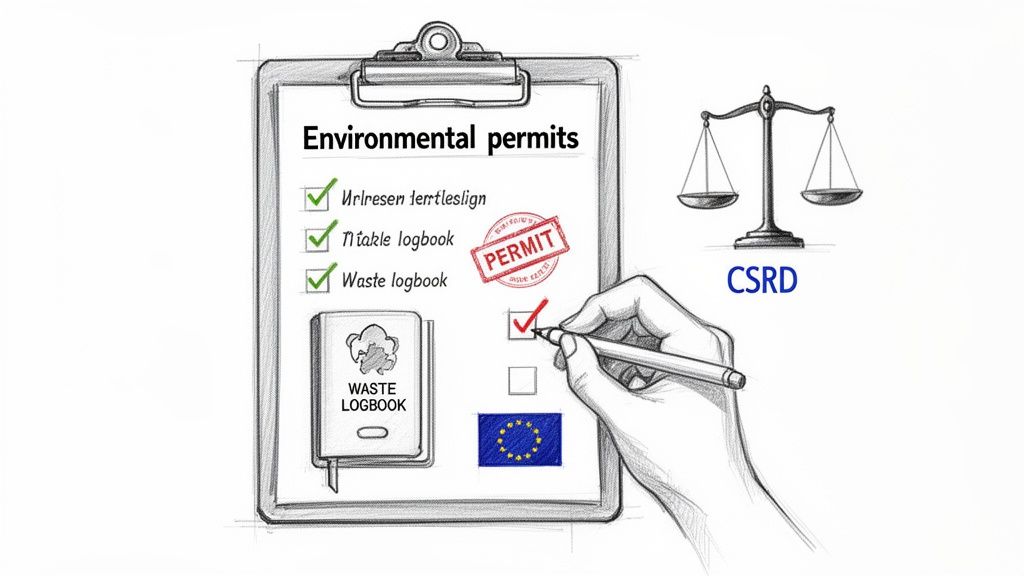
For a responsabil de mediu, getting the legal framework right is non-negotiable. It’s the foundation for everything else. This isn’t about memorizing codes; it’s about grasping the business impact of duties like obtaining an environmental permit (autorizație de mediu) or keeping perfect waste records (gestiunea deșeurilor).
The goal is to shift from reactive fire-fighting to proactive risk management. The cost of failure is much higher than a fine; it can mean operational shutdowns, a tarnished brand, and losing business with partners who demand proof of compliance.
The Bedrock of Compliance: Environmental Permits and Waste Management
Two pillars hold up the entire structure of compliance: environmental authorisations and waste management. The environmental permit is your company's licence to operate, spelling out the rules your activities must follow.
Managing this permit is a continuous job. A good responsabil de mediu ensures daily operations stay within the set limits and that monitoring reports are submitted on time.
Just as important is waste management. This is more than hiring a disposal company. It means you must:
- Classify correctly: Know exactly what you’re throwing away and separate different streams.
- Keep meticulous records: Maintain a detailed log of every kilogram of waste you generate, transport, and treat. This logbook is the first thing an inspector will see.
- Ensure traceability: Have a complete paper trail proving your waste was handled by authorised partners.
In our audit work, we consistently see that incomplete or disorganised waste logs are a major red flag for regulators. It signals a lack of internal control and often leads to deeper investigations. These day-to-day tasks are the bedrock of compliance.
The New Regulatory Landscape: CSRD and CBAM
Beyond these core duties, the rulebook is expanding. Two EU regulations are changing what’s expected from a responsabil de mediu: the Corporate Sustainability Reporting Directive (CSRD) and the Carbon Border Adjustment Mechanism (CBAM).
The CSRD makes detailed, audited sustainability reporting mandatory for a growing number of companies. It demands hard data on environmental impacts, risks, and opportunities. For the Environmental Manager, this means work on emissions, waste, and energy is no longer just for internal files; it's now a critical part of the company's official public statements. You can learn more about how these regulations intersect in our guide on the EU's "Omnibus" package.
Meanwhile, the CBAM puts a carbon price on certain goods imported into the EU, like steel and cement. This directly hits companies relying on these materials. The Environmental Manager becomes crucial for gathering carbon data from non-EU suppliers to report these "embedded" emissions—a complex but vital task for controlling costs.
These new regulations underscore the growing need for precise data. For instance, recent fieldwork documented 112 individual methane emission sources across over 75 oil and gas facilities in Romania. This highlights a stubborn challenge, but it also signals progress under the new EU Methane Regulation, as operators begin to roll out leak detection programmes. For manufacturers and importers affected by CBAM, getting a handle on such Scope 3 emissions from suppliers is now a critical financial and compliance issue.
Core Competencies of a High-Performing Environmental Manager
What separates a good responsabil de mediu from a great one? It’s no longer just about knowing environmental law. High-performing managers are business partners, not just compliance officers. Their value lies in translating complex environmental data into clear business language: risk, cost savings, and competitive advantage.
This shift requires a blend of technical depth and commercial sharpness. The goal is operational progress, not just perfect reporting.
The Three Pillars of Modern Environmental Leadership
To excel, a modern responsabil de mediu must build mastery in three core areas.
Data Analysis and Technical Acumen
A top-tier manager is fluent in data. This means building robust systems for accurately calculating the company’s carbon footprint across Scopes 1, 2, and 3. They can analyse energy consumption, track waste streams, and make sense of complex emissions data. This analytical rigour is the bedrock for creating credible, audit-ready reports for regulations like the CSRD.Strategic Project Management
Data is useless without action. A great responsabil de mediu is an effective project manager who can design and execute decarbonisation roadmaps. This involves setting realistic targets, securing budgets, and coordinating with teams across the business—from operations to procurement. They drive projects from concept to completion and deliver measurable results.Communication and Stakeholder Engagement
This is a crucial skill. A successful manager must explain the importance of an environmental initiative to technicians on the shop floor just as compellingly as they present a business case to the C-suite. They build consensus, foster a culture of environmental awareness, and act as the main point of contact for regulators, auditors, and supply chain partners.
Essential Qualifications and Continuous Development
Beyond these competencies, certain qualifications add credibility. A certification like a Lead Auditor for ISO 14001, for instance, demonstrates a deep understanding of environmental management systems. That expertise is invaluable when preparing for external verification. You can learn more by reading our guide on the environmental audit.
The most effective managers never stop learning. The regulatory landscape is constantly shifting, and a commitment to professional development is a fundamental requirement of the role.
Our team combines delivery with training so clients become autonomous over time. By building these internal capabilities, companies ensure their environmental function is a sustainable, long-term asset. The modern responsabil de mediu is the architect of this internal strength.
How to Implement This Role in Your Company
Moving from theory to action requires a practical blueprint. Bringing a responsabil de mediu into your company—or elevating the existing function—isn’t just about hiring someone. It’s a structured process that can transform compliance from a cost centre into a strategic asset.
It starts with defining ownership, securing a budget, and setting up systems to build a lasting internal capability. You’re not just filling a role; you’re creating the conditions for success, where your environmental manager has the tools and support to drive change. This is how you turn environmental management into a source of business value.
Step-by-Step Integration Process
To successfully embed the responsabil de mediu role, a methodical approach is key.
Define Ownership and Secure a Budget: First, decide if this will be a full-time internal role, an expansion of an existing employee's duties, or a function managed by an external partner. At the same time, allocate a realistic budget to cover not just salary or fees, but also training, software, and potential project costs. This includes learning how to fund key initiatives, which often involves securing environmental project grants.
Establish Data Collection Systems: You can’t manage what you don’t measure. Work with your new manager to set up reliable systems for tracking essential data like energy consumption, water usage, waste generation, and fuel. This information is the bedrock for regulatory reporting and identifying cost-saving opportunities.
Create a Cross-Functional Sustainability Committee: Your responsabil de mediu shouldn't operate in a silo. Put together a small committee with representatives from operations, finance, and procurement. This group will act as internal champions, help break down barriers, and ensure environmental goals are woven into the overall business strategy.
Set Clear KPIs and Initial Goals: Start with achievable goals to build momentum. This could be formalising waste management procedures to guarantee 100% compliant documentation, hitting a 10% reduction in a specific waste stream, or completing a baseline carbon footprint for Scopes 1 and 2. These early wins are crucial for demonstrating the role's value.
This infographic shows how the core skills of an environmental manager work together to turn raw data into real-world action and results.
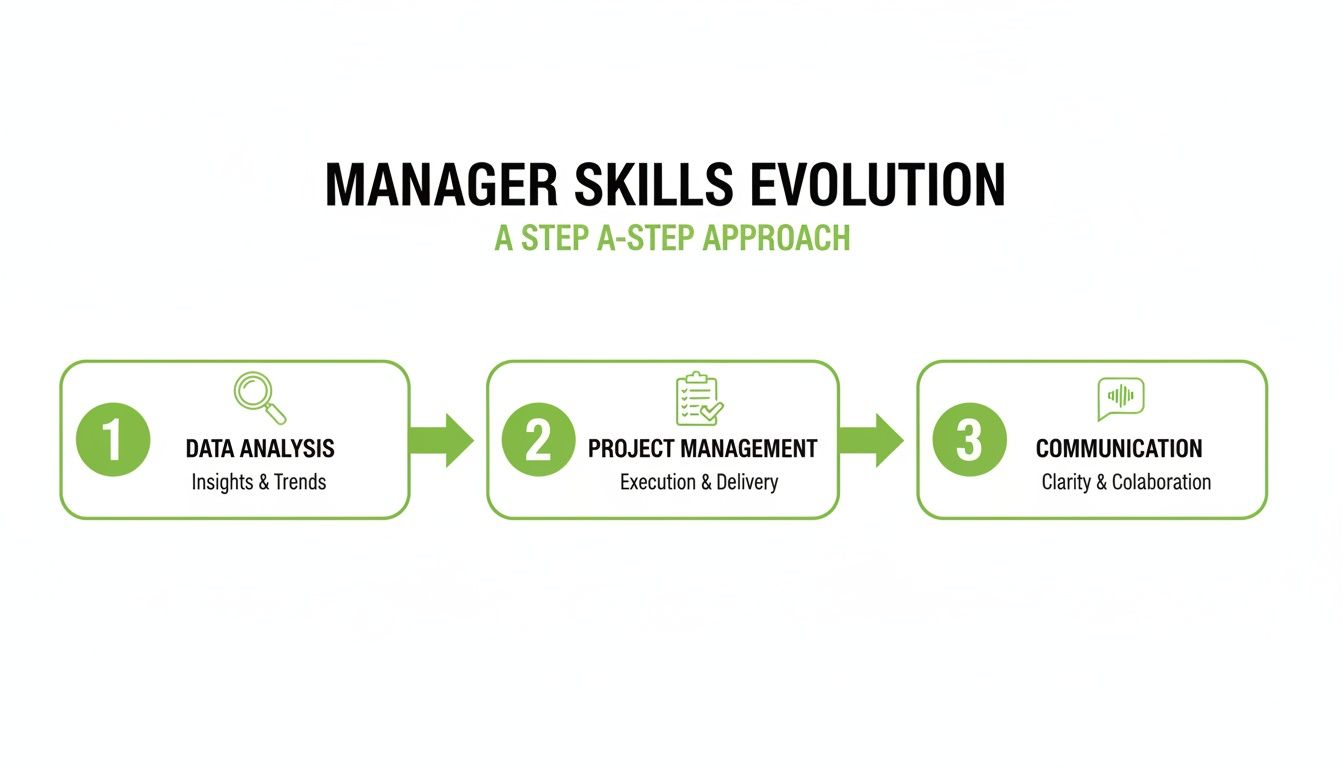
The flow from data analysis to project management and on to communication is precisely how a modern Environmental Manager converts technical insights into tangible business improvements.
A Focus on Business Outcomes
A modern job description for a responsabil de mediu should focus less on a long list of tasks and more on the business outcomes the role is expected to deliver. This reframes the position from a compliance checker to a value creator.
We combine delivery with training so teams become autonomous. An effective job description reflects this, emphasising capability-building and strategic contribution.
Instead of a task list, frame responsibilities around outcomes:
- Ensure 100% compliance with all environmental authorisations and waste management regulations to de-risk operations.
- Develop and manage an audit-ready data inventory for energy, waste, and emissions to support CSRD reporting.
- Identify and execute at least two resource efficiency projects per year that deliver measurable cost savings.
- Lead the company’s annual EcoVadis or CDP submission, aiming for a year-on-year score improvement.
This approach attracts strategic thinkers and sets clear expectations. Unfortunately, corporate sustainability transparency in Romania lags, creating an opportunity for leaders to stand out. The 2025 Romania CST Index showed just 60 published sustainability reports—a very low disclosure level compared to EU peers. For companies navigating CSRD, ECONOS helps bridge this gap with software for automated data collection and audit-ready reporting that boosts market access.
CSRD and ESRS Readiness Checklist
One of the first goals for your new responsabil de mediu will be preparing for the Corporate Sustainability Reporting Directive (CSRD) and the accompanying European Sustainability Reporting Standards (ESRS). This checklist offers a practical roadmap.
CSRD and ESRS Readiness Checklist
By following this structured approach, your company can effectively implement the responsabil de mediu role and turn regulatory obligations into a strategic advantage.
Connecting Your Work to Reporting and Supply Chains
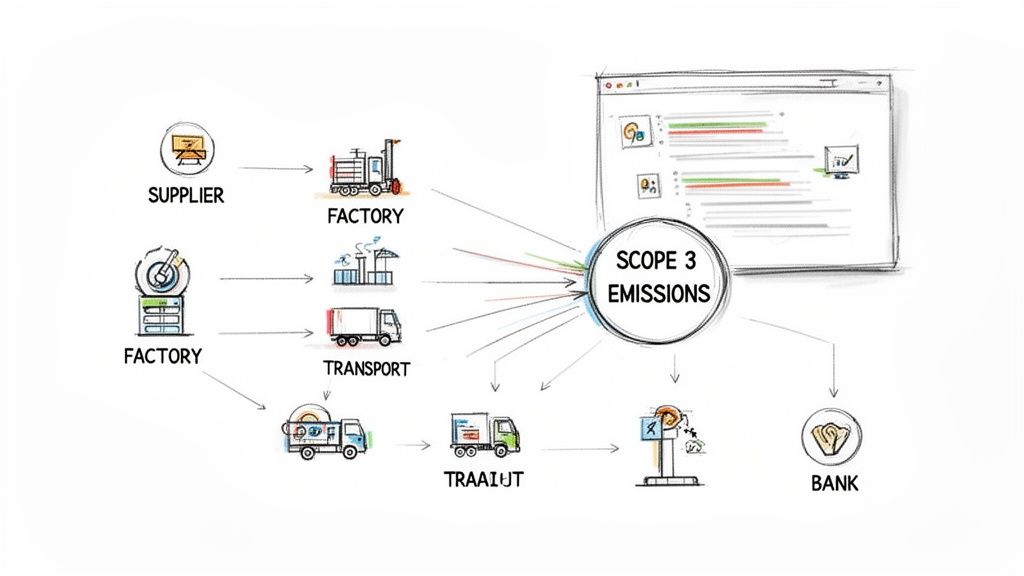
The daily work of a responsabil de mediu is the engine that powers a company's sustainability strategy. Every kilowatt-hour saved, kilogram of waste tracked, and emission source logged becomes the raw data for credible corporate reports and stronger supply chain partnerships.
This connection isn't optional. Progress on the ground is the point, and effective reporting is the direct result. The data you manage forms the foundation for everything from CDP responses and EcoVadis scores to alignment with global standards like IFRS S1/S2.
From Operational Data to Strategic Reporting
The numbers you collect are a strategic asset. When a bank reviews a green financing application or a major client vets a new supplier, they are looking for solid, ISO-aligned data. A skilled responsabil de mediu delivers that proof.
This is how operational work translates into business value:
- Credible Reporting: Your precise records on energy, waste, and water are key to answering questionnaires from platforms like CDP and EcoVadis. Good data leads to better scores.
- Audit-Ready Information: Under regulations like CSRD, your environmental data will be audited. The systems you manage ensure you have evidence on hand.
- Informed Decision-Making: Accurate data shows leadership what's really happening, allowing them to set realistic targets and allocate budgets effectively.
The quality of a company's sustainability report directly reflects the quality of its internal data management. Weak data leads to vague claims; strong, verifiable data builds trust.
Romania's total greenhouse gas emissions dropped by 59.5% in 2023 compared to 1990—far exceeding EU targets. This national progress creates a new reality for businesses. While the macro trend is positive, the pressure to manage your local impact under CSRD and CBAM is more intense. ECONOS helps companies replicate this success at an organisational level through precise carbon footprinting. You can explore more on how these country-level performance insights relate to global climate action efforts.
The Key to Unlocking Supply Chain Value
A company’s environmental footprint doesn't stop at its factory gates. Scope 3 emissions—from the supply chain—often represent the biggest portion of its carbon impact. The responsabil de mediu is central to controlling this.
In our experience, suppliers with their own dedicated environmental manager respond to carbon data requests faster and more accurately. They already have systems in place. This makes them more reliable partners.
Your role as an Environmental Manager is therefore crucial for:
- Engaging Suppliers: You are the technical expert who can help suppliers understand your data needs and support them in building their own measurement skills.
- Managing Scope 3 Data: You coordinate the collection of emissions data from hundreds or even thousands of suppliers—a critical task for accurate corporate footprinting.
- Strengthening Partnerships: By working with suppliers on decarbonisation, you help build a more resilient and competitive value chain for everyone. For a deeper look, our guide on the integrated environmental management system is a great place to start.
Ultimately, the meticulous work of the responsabil de mediu connects the dots. You turn operational details into strategic advantages that strengthen the entire business.
The Environmental Manager as a Business Value Creator
We’ve moved far beyond the image of the responsabil de mediu as a simple compliance officer. The role is no longer a cost centre focused on avoiding fines. Today, it’s a critical driver of business value, operational resilience, and competitive advantage.
An empowered Environmental Manager gives your company control. They transform complex regulatory pressures—like CSRD—into clear opportunities for improvement. The expertise they bring is about building lasting internal capabilities, so your own teams become autonomous.
From Obligation to Opportunity
Investing in strong environmental management is a strategic decision that pays clear dividends. A skilled responsabil de mediu directly strengthens your business in ways that show up on the bottom line.
- De-risking operations: Proactively managing compliance protects your business from penalties, disruptions, and reputational damage.
- Optimising costs: By identifying inefficiencies in energy, water, and materials, they uncover direct financial savings.
- Enhancing market access: Demonstrating credible environmental performance opens doors to new clients, investors, and green financing.
The question is no longer if your company can afford to invest in strong environmental management, but how you can afford not to. This role is central to building a business that is not just compliant, but competitive and resilient.
Our approach combines delivering results with training, ensuring your teams become self-sufficient. By fostering this internal strength, your company gains the ability to navigate challenges and seize opportunities on its own. The responsabil de mediu is the key figure who makes this transition possible.
Ultimately, this function gives you a clear view of your operational footprint and the control needed to improve it. It is the practical path to transforming environmental obligations into a catalyst for innovation and sustainable growth.
Frequently Asked Questions
Navigating environmental obligations often brings up important questions. Here are clear, direct answers to some of the most common queries we hear about the responsabil de mediu role.
Is a Full-Time Environmental Manager Mandatory?
Not every company needs a dedicated, full-time employee, but any business generating an impact must meet its legal obligations. For many small and medium-sized enterprises (SMEs), these duties can be managed effectively by an external service or a properly trained internal employee.
However, as regulations like CSRD and supply chain demands grow, larger companies are finding that a full-time manager is a strategic necessity. The right answer depends on your company's size, industry, and the complexity of its environmental footprint.
What Is the First Step with No System in Place?
The best place to start is with a baseline assessment. This creates a simple inventory of your company’s environmental touchpoints and helps you understand your legal obligations.
Start by asking a few fundamental questions:
- What permits or authorisations do our operations require?
- What types of waste do we generate, and in what quantities?
- Where are our main sources of energy consumption and emissions?
This initial diagnosis will highlight your biggest compliance gaps and operational risks. It gives you a clear, prioritised roadmap. We often see companies get stuck trying to do everything at once. The practical approach is to identify your single biggest legal or financial risk and focus on solving that first.
How Does an Environmental Manager Work with Finance?
This collaboration is critical. The responsabil de mediu provides the finance team with the robust, auditable data needed for non-financial reporting under the CSRD, which is now integrated with annual financial reports.
They work together to put a price on climate-related financial risks and opportunities, translating environmental metrics into the language of business. The manager's efficiency projects—like reducing energy consumption—translate straight into cost savings. They also collaborate on budgeting for environmental investments and provide the data needed to secure green loans.
Can We Just Use Software to Manage This?
Software is a powerful tool, but it’s not a replacement for a skilled professional. A person provides the strategic oversight that technology cannot.
Specialised software is excellent for automating data collection for energy, waste, and emissions. But it's the responsabil de mediu who interprets that data, designs reduction projects, ensures ongoing regulatory compliance, and engages with stakeholders like auditors and customers.
So, what does this mean for companies? The most effective strategy combines a competent manager with the right digital tools. This is how you drive real progress and build a strong, autonomous internal capability for the long run.
At ECONOS 🌱, we provide the expertise and tools to build a strong, audit-ready environmental management function. We help you measure your footprint, navigate complex regulations like CSRD, and train your team to become self-sufficient. Learn more about how we can support your business at https://www.econos-esg.com.